Table of Content
Focus on what matters. BIXO handles the rest!

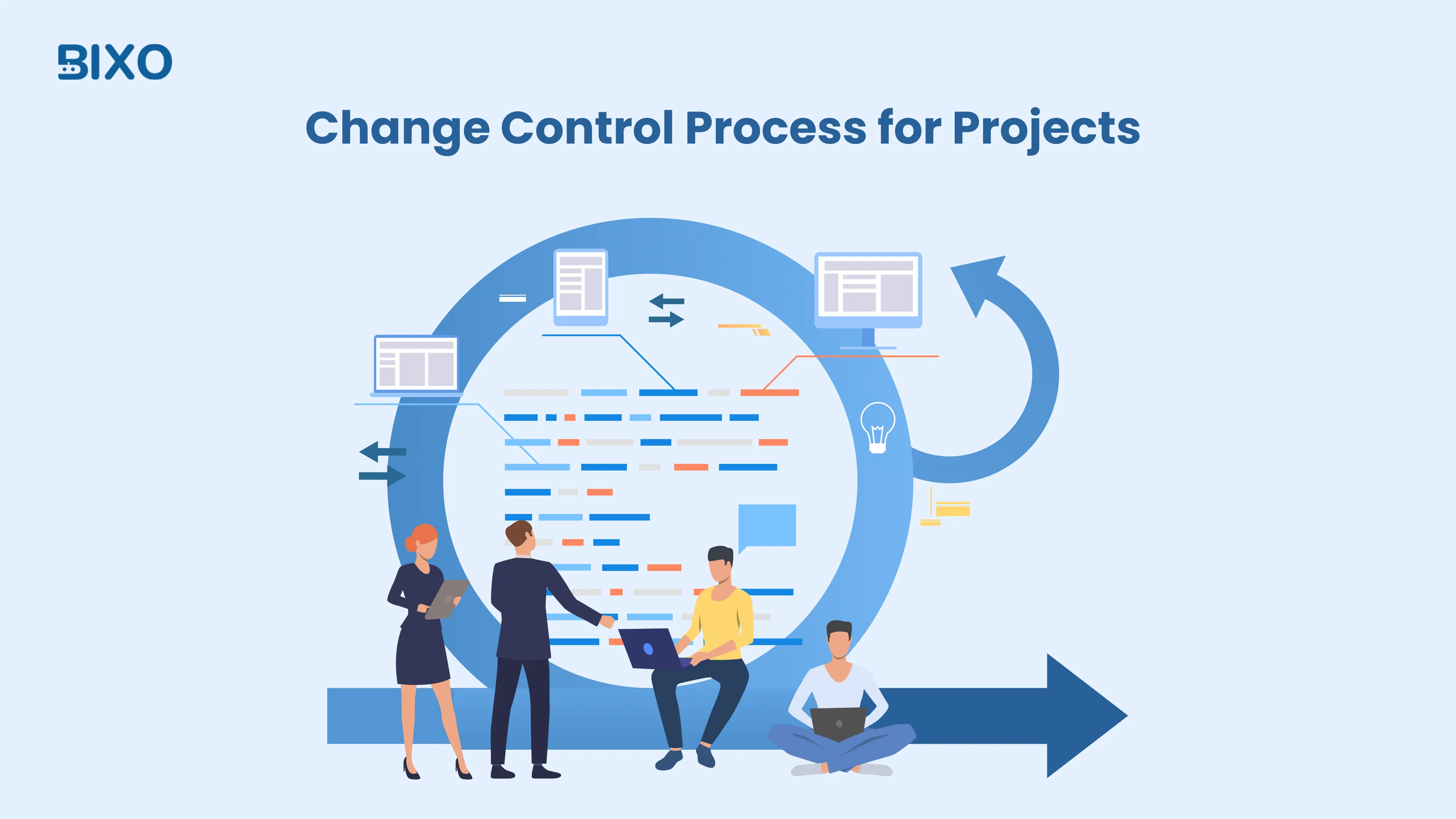
You’re in the middle of a project and everything’s going well. Then someone asks for just one change. Next thing you know, dates start moving, conversations get longer, and suddenly you’re solving problems instead of making progress. This usually happens when there isn’t a clear change control process in place. The change isn’t the real issue. The chaos comes when changes are made on the fly without any structure.
Here’s the thing. You don’t need to feel stressed every time someone wants to tweak the plan. You just need a simple and organised way to review, approve, and manage changes so your scope, time, and budget stay on track.
In this blog, you will learn each step of the change control process in a simple, easy-to-follow way. By the end of this blog, you will know how to handle change requests smoothly, stay in control, and keep your project moving without all the confusion.
What Are the 9 Steps in the Change Control Process?

Changes happen in every project, but handling them without a plan can quickly lead to confusion and delays. A clear change control process helps you manage requests in an organised way, so nothing gets missed.
By following a simple set of steps, you can review, approve, implement, and track changes while keeping your project on track, your team coordinated, and your goals within reach. Here’s how to make it work smoothly.
Step 1: Identify and Submit the Change Request
Every change starts with someone noticing something that needs attention. Maybe there is a missing requirement, a client asks for something new, or a risk suddenly becomes real. Whatever it is, the key here is clarity. Put the change into writing, explain why it is important, and what you expect to happen if it is approved.
This isn’t about just filling in the forms for the sake of it. It’s so you don’t end up with confusing discussions or last-minute surprises. When you write the change request clearly, it turns a casual idea into something everyone understands and can act on confidently.
Step 2: Record and Acknowledge the Request
When someone puts in a request for change, ensure the request is clearly noted in one place in order that it does not get lost or forgotten. This keeps things organised and enables everyone to understand what is going on. Then let the person who raised the request know you have received it.
A simple confirmation goes a long way. This indicates that you heard them and saves them from having to chase you for updates. When people see that every request is noted and confirmed, they start trusting the process and feel confident that their input is actually important.
Step 3: Analyse Impact on Scope, Timeline, and Budget
This part of the change control process is where you slow down and think carefully. Any change, no matter how tiny it looks, will affect something in your project. It could push deadlines, stretch budgets, or add extra work for the team. So instead of saying yes on the spot, pause and check what it really means. That clarity saves a lot of trouble later.
Will this push your deadlines? Will you need more budget than planned? Will your team need extra hands or extra time? And if you go ahead, will other tasks slow down or have to wait?
Taking the time to evaluate the impacts allows you to avoid rushed approvals, which lead to stress, delays, or quality issues later. But more importantly, knowing the impact clearly lets you make decisions that are intentional rather than reactive and keeps the project on track rather than being diverted by sudden ideas.
Step 4: Review the Request with Key Stakeholders
After determining what the change will entail, the next step is to get the right stakeholders involved. Stakeholders are the people who understand the project priorities, risks and goals. Talk to them about what the change is, why it’s being suggested, and what could happen if you move forward with it. Make space for real discussion instead of trying to get everyone to agree quickly. This is a great time to encourage discussion rather than to rush to agreement.
This step is necessary in the project management change control process because making ensure everyone is aligned. When the key people agree on the change, there are fewer doubts, fewer surprises, and less friction later on. It also means that ownership of the decision is shared instead of leaving it up to assumptions or individual opinions. Here, clear communication will help the change happen smoothly.
Step 5: Approve or Reject the Change
Now it’s time to make the final decision. In the change control approval process, a change is either accepted or rejected, and it’s important to explain why. Saying yes gives the team confidence to move forward. Saying no is not a failure. It just means the change isn’t right for the project at the moment, or the cost is higher than the benefit. The key is to give closure.
Unresolved leaving requests only slow progress and create confusion. A clear yes or no shows strong decision-making, keeps the project on track, and helps everyone stay focused and aligned.
Step 6: Plan the Implementation
Getting approval points you in the right direction, but a clear plan is what actually makes it happen. At this stage of the project management change control process, you break the change into tasks, assign who’s responsible for what, set timelines, highlight communication points, and note any dependencies.
Update the project plan so everyone can see where the change fits and how it might affect other work. The aim is to avoid last-minute chaos. When the team has a clear plan, everyone knows what to do and when to do it. Good planning reduces stress, makes work run smoothly, and helps the change fit naturally into the project instead of causing confusion.
Step 7: Implement the Change
This is the stage where the work actually gets done. In this part of the change control process in project management, the team follows the plan, updates systems, tweaks processes, and makes the change happen. Success depends on everyone understanding their role, communicating clearly, and taking responsibility for their tasks.
When the team knows what to do and when, work feels steady instead of rushed, and any questions or issues get resolved quickly because expectations were already set. A good implementation doesn’t feel confusing. It seems easy because all the planning and preparation were done earlier.
Step 8: Monitor and Validate the Outcome
Applying the change does not mean the job is done. At this stage of the change control process, it’s important to watch the results and make sure the change is working as expected without disrupting other parts of the project. Good teams don’t just assume everything is fine. They check and confirm.
Today, this is much easier with tools like BIXO, the AI assistant. BIXO follows up with your team, tracks task progress, sends reminders for deadlines, and flags any issues that could slow things down. Instead of spending time chasing updates or worrying about missed statuses, you get a clear picture automatically. It’s like having quiet support working behind the scenes, keeping your project moving smoothly without constant checking.
Step 9: Document and Close the Change
Once you’re sure the change is stable and achieving the results you expected, it’s time to close it properly. At this stage of the change control process in project management, write down exactly what was changed, why it was needed, who approved it, and what impact it had. Keeping a clear record helps your team learn from each change and avoids confusion later.
When someone asks why a decision was made or what difference it made, you can show them clear information instead of relying on memory or guesses. Closing changes the right way adds structure, keeps things organised, and makes managing the project easier as it grows.
Conclusion
By following a clear change control process in project management, you can handle requests confidently and keep your project on track. Each step, from submitting a change to monitoring results and formally closing it, ensures that nothing is missed, decisions are well-informed, and your team stays aligned.
Using a structured project management change control process flow not only reduces confusion and delays but also brings clarity, accountability, and smooth execution. When you make changes in an organised way, you protect your timelines, budgets, and overall project success.
FAQs
A change control process in project management is a simple, organised way to handle changes in your project’s scope, schedule, or budget. It makes sure every change is reviewed, approved, and put into action smoothly without causing delays or confusion.
A change control process keeps things clear and on track. It makes sure every change is properly reviewed, approved, and recorded, helping your team stay aligned, projects run on time, and resources are used efficiently.
The process starts with submitting a change request and recording it clearly. Next, you check how it will affect the project, discuss it with the right people, decide whether to approve it, plan and carry it out, track its progress and finally close it, keeping everything organised and on track.
To make sure a change is successfully implemented, follow each step of the change control process. Break the work into tasks, assign responsibilities, keep an eye on progress, check the results, and document everything. This keeps things clear, organised, and on track.
Get a demo of BIXO

Recommended Blogs
How to Delegate Tasks Effectively: 7 Tips for Managers
Learn how to delegate tasks effectively, save time, and boost team productivity with step-by-step tips, real examples, and smart AI tools.
 Bhuvana Bitra |
 Oct 17, 2025

Project Objectives: A Simple Guide with Real Life Examples
Learn how to set clear project objectives that guide your team, track progress, and ensure success. Get practical tips and real-life examples to get started right.
Tarun Kumar Reddy Atmakuru |
Oct 17, 2025

25 Key Project Management Skills Every Manager Should Master
Learn 25 essential project management skills - soft, hard, and technical to manage teams, meet deadlines, and deliver successful projects.
Tarun Kumar Reddy Atmakuru |
Oct 17, 2025
×
Focus on what matters. BIXO handles the rest!