Table of Content
Focus on what matters. BIXO handles the rest!

Each project you take on needs a goal and a plan to achieve it successfully. But without the right approach, even strong ideas can lose focus. When you understand the main components of project management, you can stay organised, make smarter decisions, and guide your team in the right direction.
By focusing on the key elements of project management, you bring more structure and clarity to your work. Each of these components of the project helps you plan better, execute smoothly, and finish your projects successfully.
In this blog, you’ll learn about the 10 key components of project management that can help you manage your work confidently and deliver great results.
What Are the 10 Key Components of Project Management?
Every successful project has a few main building blocks. These key components help you plan effectively, guide your team, and keep the project moving in the right direction. Here are the 10 main components of project management you need to know:

Scope
The scope defines what your project will cover and what it will not. It clearly sets the goals and deliverables so your team knows exactly what to focus on. A well-defined scope prevents extra work and confusion, helping your project stay on track.
It also helps you manage expectations with clients or stakeholders by making clear what will be delivered and what is not included in the project. When the scope is defined well, your team can plan tasks more effectively, avoid unnecessary rework, and keep everyone aligned toward the same goals.
Tips for Defining Scope:
- Clearly list what is included and excluded in your project.
- Share the project scope with your team so everyone understands the priorities.
- Update the scope if changes occur to keep everyone on the same page.
Time
Time sets the schedule for your project, showing when each task should start and finish. Planning carefully helps you avoid delays, manage workloads, and keep the project on track. Regularly checking progress allows you to spot problems early and adjust as needed, ensuring your team has enough time to do quality work and stay motivated.
Tips for Managing Time:
- Start with the top priorities so the team doesn’t lose focus.
- Break big tasks into smaller steps to make them easier to manage.
- Check progress regularly and adjust your plan if needed.
- Make sure everyone knows the schedule so the team stays on track.
Budget
The budget tells you how much money your project can consume and spend. It serves as a guide to ensure that all the expenses are justified and support your goals. Monitoring expenses helps you stay within your budget and limits, and ensures your resources are used wisely.
Having a clear budget plan prevents surprises, keeps your project financially fit and will assist you in making confident decisions on where to invest both time and money. Reviewing your budget regularly allows you to stay flexible and adjust if anything changes during the project.
Tips for Managing Budget:
- Note down every expense, so you know where your money is being used.
- Keep a small amount aside for any sudden or extra costs.
- Use your budget first for the most important needs of the project.
- Check your spending regularly and make small changes if required.
Resources
Resources include your team members, tools, equipment, and materials. These are all the things that help you complete the project. Managing them properly ensures work moves forward without delays. When people have the right tools and clear roles, they can do their best at work. It also helps you avoid overloading anyone and keeps tasks running smoothly. In simple words, managing resources well means using what you have in the best way to complete your project without any trouble.
Procurement
Procurement is about getting the materials, tools, or services your project needs from outside sources. It makes sure everything you need arrives on time and meets your quality standards. When handled properly, procurement keeps your project running smoothly without unnecessary delays.
It also involves choosing the right vendors, comparing costs, and making fair agreements. Good procurement helps you build reliable partnerships, save money, and avoid last-minute issues. In simple words, it’s about planning ahead so your team always has what it needs to keep the project moving forward.
Risk Management
Risk management means finding possible problems before they happen and planning how to handle them. Every project has risks like delays, cost increases, or missing resources, but managing them early helps you stay in control. By spotting risks ahead of time, you can make smarter decisions and reduce surprises that could slow down the project.
It also helps your team stay confident and prepared because everyone knows what to do if something goes wrong. Instead of reacting to issues, you’re ready for them. This keeps your project steady and your goals within reach.
Tips for Managing Risks:
- Identify possible risks at the beginning of your project.
- Learn from past projects to handle future risks more effectively.
- Track risks regularly and update your plans as the project moves forward.
Quality
Quality defines the standard of work your project should achieve. By setting clear expectations, your team knows what “done right” looks like. Maintaining quality ensures your project delivers value, builds trust, and reduces the need for rework later.
Quality management isn’t just about checking the final output. It’s about ensuring every step meets the expected standards. When your team focuses on quality, it improves efficiency, client satisfaction, and overall workflow.
Tips for Maintaining Quality:
- Set clear quality standards for each deliverable.
- Check work at key points, not only at the end.
- Keep standards consistent across all tasks to maintain reliability.
- Encourage regular feedback and reviews to identify issues early.
Communication
Communication is about making sure everyone understands what’s happening in the project. It involves sharing updates, decisions, and changes so the whole team stays informed and avoids confusion. Clear communication makes work easier, reduces mistakes, and helps everyone move in the same direction. It’s also about listening and understanding others.
When team members talk openly and share their thoughts, it builds trust and helps solve problems faster. In simple words, good communication keeps your team connected and your project on track.
Stakeholder Management
Stakeholder management is about understanding who is affected by your project and what they expect. Keeping stakeholders involved ensures their needs are met and helps prevent misunderstandings or conflicts. It also builds trust and keeps everyone moving towards the same goal.
When you communicate regularly and listen to their feedback, stakeholders feel valued and confident in the project’s progress. This makes it easier to get their support when you need decisions or approvals. In short, managing stakeholders well means keeping everyone informed, involved, and aligned from start to finish.
Integration
Integration is about connecting all parts of your project, so they work together smoothly. When scope, time, budget, resources, quality, and communication are aligned, your project flows easily from start to finish. It ensures that every part of the project supports the overall management goal instead of working separately.
Good integration helps you spot issues early, manage changes smoothly, and keep everything on track. It also makes your project more organised and reduces confusion among team members, helping the team work as one unit.
Tips for Better Integration
- Keep all your project details updated in one place.
- Review progress regularly to catch any gaps early.
- Make small adjustments as needed to keep things balanced.
How BIXO Supports Every Part of Project Management
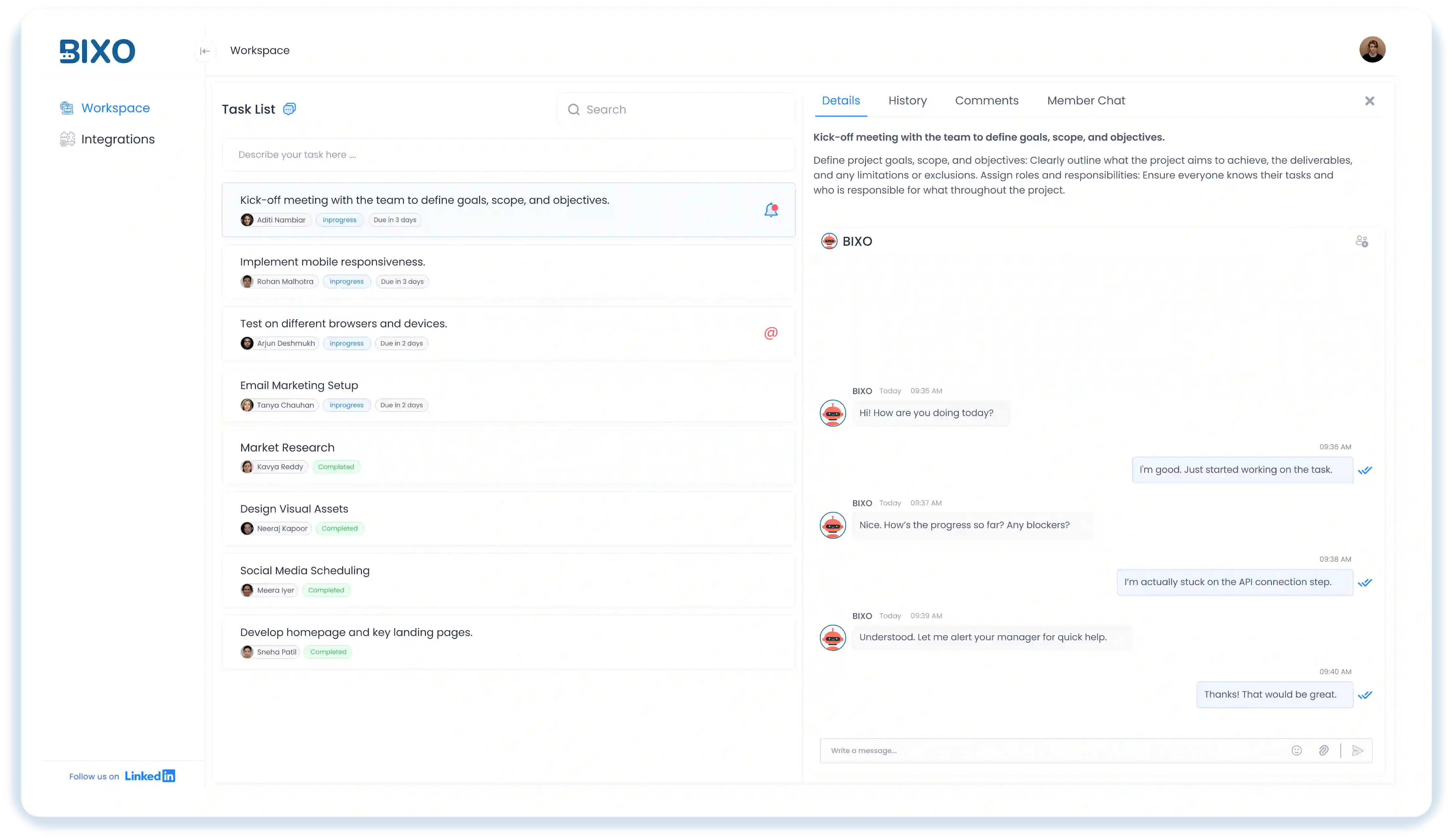
BIXO helps you manage key parts of your project in one place. It keeps your scope clear with well-defined tasks and timelines, tracks progress automatically, and helps you plan your time better. You can assign work to the right people, balance workloads, and avoid delays.
With smart reminders, progress reports, and team updates, BIXO improves communication, reduces risks caused by missed deadlines, and helps maintain overall project quality. It brings everything together so your team can stay focused and work smoothly from start to finish.
Conclusion
Managing a project becomes much easier when you focus on these key components. Each one plays an important role in keeping your work organised, your team confident, and your goals clear. When you plan carefully and stay connected with your team, even complex projects become manageable. With tools like BIXO to support you, you can save time, reduce stress, and lead your projects to success with confidence.
FAQs
Using one central platform for all tasks, deadlines, and updates helps keep everything in order. Tools like BIXO make this easier by giving you a clear view of every project in one place.
Celebrate small wins, appreciate their efforts, and keep communication open. When people feel valued, they stay motivated and do their best work.
Start with small projects, use basic tools, and practice regularly. Over time, you’ll understand how each part fits together.
Stay flexible and update your plan as soon as changes happen. Keep your team informed, adjust timelines if needed, and make sure everyone knows the new priorities.
Get a demo of BIXO

Recommended Blogs
Project Initiation: Key Steps, Best Practices, & Mistakes to Avoid
Learn what project initiation is, why it matters, key steps to follow, best practices to apply, and mistakes to avoid for a strong and successful project start.
Project Management Triangle: Managing the Triple Constraints
Master the project management triangle by balancing scope, cost, and time with simple strategies that drive successful outcomes every time.
 Jahnavi Chintakrindhi |
 Oct 13, 2025
How to Delegate Tasks Effectively: 7 Tips for Managers
Learn how to delegate tasks effectively, save time, and boost team productivity with step-by-step tips, real examples, and smart AI tools.
Bhuvana Bitra |
Oct 17, 2025
×
Focus on what matters. BIXO handles the rest!