Table of Content
Focus on what matters. BIXO handles the rest!

How can you manage many projects across different teams without losing clarity or control? When work is spread out in too many places, you can miss updates, tasks get delayed, and it becomes hard to understand what is actually happening.
Enterprise project management organises all your projects in one place so you can see what’s happening and stay on track. It gives leaders a clear view of what is happening, helps teams stay on the same page, and makes decision-making easier and faster. In this guide, you’ll learn how enterprise project management works and how to use it to keep every project moving smoothly.
What Is Enterprise Project Management?
Enterprise Project Management (EPM) is the practice of managing all projects in an organisation through a single, coordinated system. It helps teams work together, stay aligned with business goals, and make informed decisions using shared project data.
The purpose of EPM is to bring all your projects into one organised place so you and your team can clearly understand what’s happening across the company. It helps you prioritise the right projects, manage resources better, and avoid the confusion that comes from scattered information.
What Are the Elements of Enterprise Project Management?
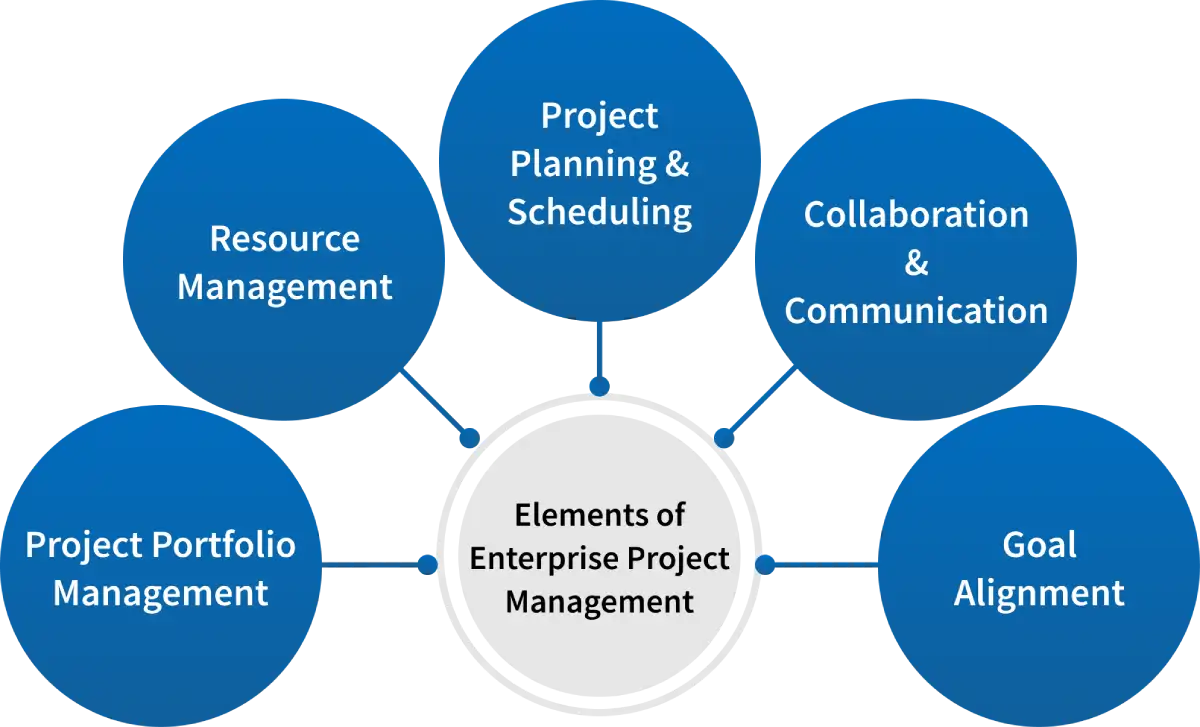
Enterprise Project Management (EPM) is built on a set of core elements that help you manage all your projects in a unified, organised, and strategic way. These elements make it easier for you and your team to plan work, use resources wisely, and ensure every project contributes to your organisation’s bigger goals.
Project Portfolio Management
This element focuses on selecting and prioritising the right projects for your organisation. Instead of saying yes to every new idea, you should identify which projects actually bring value and align with your business goals. By doing this, you ensure resources are used wisely, and you make smarter decisions about where to invest your time, money, and effort.
Resource Management
Resource management is about using people, time, budgets, and tools in the most balanced way. It gives a clear picture of who’s available, who’s overloaded, and where extra support is needed. With the right planning, you can help your team work comfortably, avoid burnout, and prevent unnecessary delays.
Project Planning & Scheduling
Project planning and scheduling give you a clear roadmap before you begin any project. It involves breaking work into simple tasks, deciding who will handle what, setting timelines, and understanding how different steps connect to each other. Having a clear schedule helps the entire team to trace the workflow easily.
Collaboration & Communication
EPM encourages stronger teamwork by making communication feel smoother and more organised. Instead of updates being scattered across emails and chats, teams can share information, files, and feedback in one place. This cuts down confusion and helps decisions happen faster. And with everything in one spot, you can keep everyone on the same page throughout the project.
Goal Alignment
This element makes sure every project actually supports the organisation’s long-term goals. Instead of teams working separately with no clear direction, EPM links all projects to the company’s overall vision and strategy. It keeps work aligned and prevents teams from repeating the same tasks. With this clarity, you can guide your team to focus on what truly matters.
How to Implement Enterprise Project Management?
Implementing enterprise project management becomes easier when you follow a clear, step-by-step approach that brings structure, clarity, and alignment to all your projects. Here are the steps you can follow to get started.

Assess Your Current Processes
Start by knowing how your organisation is managing projects now. Look at what’s working, where there is a problem in the teams, and where there is confusion. This is the initial step that finds the way to identify gaps before constructing your enterprise project management model or selecting any tools.
Define Your Goals and Expectations
Clarify what you want to achieve with enterprise project management, whether it is better visibility, smoother teamwork, smarter resource allocation, or stronger alignment with business goals. Clear goals guide your entire implementation process and influence the enterprise project management life cycle.
Build a Centralised Project Framework
Create a standard structure for how projects should be planned, approved, executed, and reported. This framework becomes the backbone of your enterprise project portfolio management, helping all teams follow the same process and avoid confusion.
Choose the Right EPM Tools
Select the right enterprise project management software, something that supports planning, collaboration, tracking, reporting, and resource management. The right enterprise project management tools make it easier to manage all projects in one connected place.
Train Your Teams and Set Clear Roles
Make sure everyone understands how the system works, what the standard process is, and what their responsibilities are. Proper training builds confidence and helps teams use the new EPM tools effectively.
Start with a Pilot Project
Before applying the enterprise project management model across the whole organisation, start with one or two pilot projects. This helps you test the process, gather feedback, and make small improvements so the enterprise project portfolio management process works smoothly when you use it for more teams.
Monitor, Improve, and Scale
Once things are working, track performance, review feedback, and make improvements. As teams get comfortable with the system, you can slowly expand enterprise project management to more departments so everyone works in a more organised and connected way.
What Are the Benefits of Enterprise Project Management?
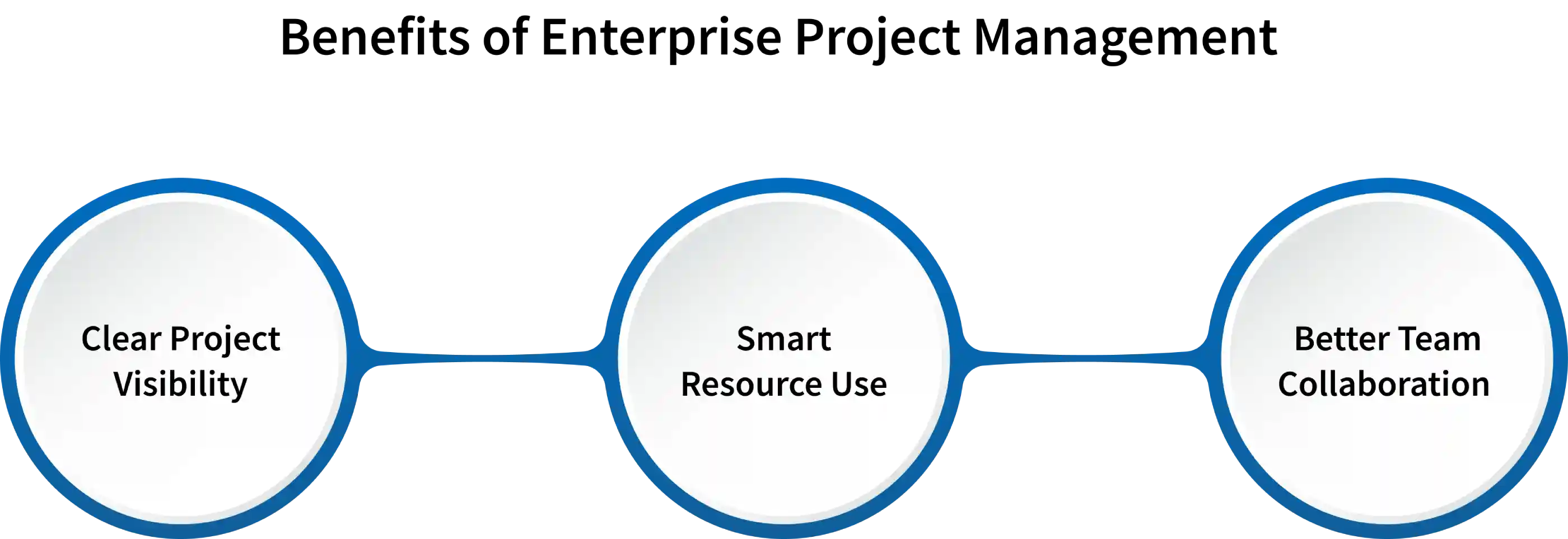
EPM helps you keep track of every project in your organisation, so nothing gets overlooked. It makes it easier to spot issues early and ensures work stays aligned with company goals.
More Visibility Across Projects
With EPM, you can see the status of every project in one place. You get a clear view of progress, deadlines, and upcoming challenges, which helps you make better decisions and keep projects moving in the right direction.
Smarter Use of Resources
Resources like time, people, and budgets are used more efficiently. EPM helps balance workloads, reduce idle time, and ensure that the right people are assigned to the right tasks, improving overall productivity.
Smoother Team Collaboration
Your team collaborates better when all updates, files, and feedback are stored in one place. This reduces miscommunication, helps departments stay in sync, and ensures that work flows smoothly from start to finish.
Lower Project Risks
EPM helps spot potential problems in projects before they become serious. By identifying risks early, teams can take corrective action, avoid delays, and complete projects on time while maintaining quality.
What Are the Common Challenges in Enterprise Project Management?
Managing projects across an organisation can be tricky. Problems with communication, resources, and keeping track of work can cause delays, even when using EPM. Knowing these common issues makes it easier to deal with them.
- Resistance to Change: Teams may be hesitant to adopt new EPM tools or processes. This hesitation can slow things down and make it harder for the organisation to improve its project management.
- Difficulty in Tracking Progress: With several projects running concurrently, it is difficult to track deadlines, project milestones and completion of tasks. It can be more difficult to make the right decisions without a centralised view.
- Lack of Standardised Processes: Different teams may work in their own way, which can create inconsistencies across projects. This makes it harder to track progress, maintain quality, and ensure everyone is on the same page.
These challenges can be managed with the right approach and tools. To overcome resistance to change, you can guide your team with proper training and clearly show the advantages of using EPM tools.
Standardising processes across all teams helps make work more consistent and easier to monitor. Using a centralised system gives a clear view of all projects, making it simpler to track progress, deadlines, and milestones, and helping you make better decisions.
How Are Enterprise Project Management and Project Management Different?
Here’s a brief comparison between enterprise project management (EPM) and project management (PM):
| Feature | Enterprise Project Management (EPM) | Project Management (PM) |
|---|
Use BIXO to Maintain Your Projects at an Enterprise Level
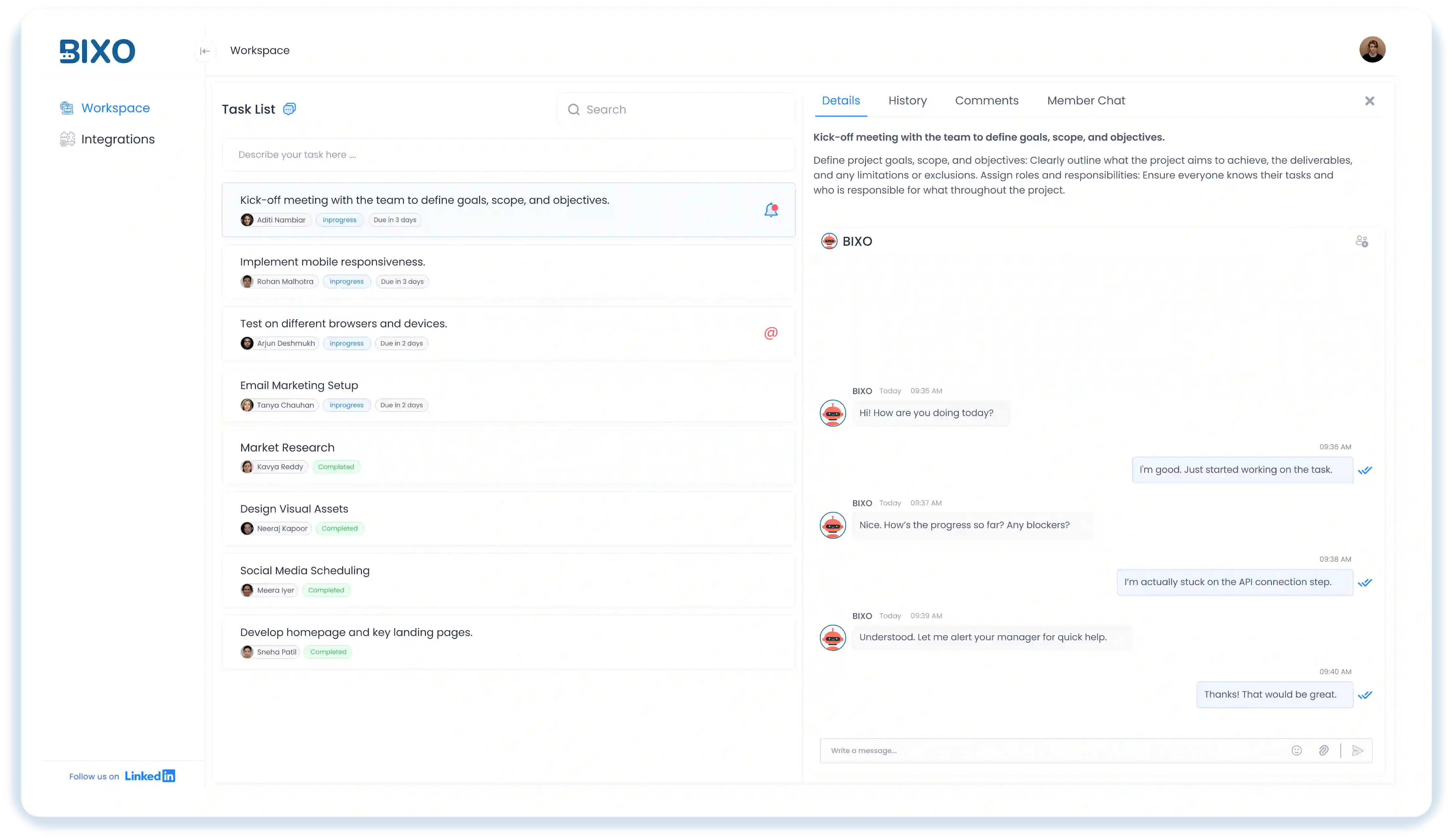
Managing projects across a whole organisation can feel confusing, and that’s exactly where BIXO becomes the solution. It brings all your projects into one clean, organised space, making it easier to understand what’s happening, what needs attention, and where support is required.
By giving you clearer visibility, smoother teamwork, and real-time updates, BIXO helps you fix the common problems that come with enterprise-level project management. It keeps your projects aligned with your goals and gives your team the direction they need to move forward with confidence.
Conclusion
Enterprise project management is all about making work smoother, more organised, and easier for everyone when managing multiple projects. When every project is organised in one place, it becomes easier to understand what’s going well, where help is needed, and how teams are progressing. It reduces confusion, supports better teamwork, and keeps everyone focused on the same goals. By doing it right, you can manage projects more easily and lead your organisation in the right direction.
FAQs
EPM is commonly used in industries that have several running projects, including IT, construction, manufacturing, healthcare, and finance, to ensure efficiency and focus on business objectives.
Absolutely. By using Centralised EPM systems, remote teams can work together, exchange updates and monitor tasks in real time, keeping everyone on track no matter where they are.
It’s a good idea to check EPM processes regularly, every few months, to spot problems, use resources better, and adjust to any changes in the business.
The majority of EPM tools are capable of connecting to other business software, such as CRM, HR, and accounting software to simplify the workflow and eliminate redundant work.
Get a demo of BIXO

Recommended Blogs
Project Management Triangle: Managing the Triple Constraints
Master the project management triangle by balancing scope, cost, and time with simple strategies that drive successful outcomes every time.
 Jahnavi Chintakrindhi |
 Oct 13, 2025
How to Delegate Tasks Effectively: 7 Tips for Managers
Learn how to delegate tasks effectively, save time, and boost team productivity with step-by-step tips, real examples, and smart AI tools.
Bhuvana Bitra |
Oct 17, 2025
Project Initiation: Key Steps, Best Practices, & Mistakes to Avoid
Learn what project initiation is, why it matters, key steps to follow, best practices to apply, and mistakes to avoid for a strong and successful project start.
×
Focus on what matters. BIXO handles the rest!