Table of Content
Focus on what matters. BIXO handles the rest!

Handling multiple projects at once can be really draining. Deadlines clash, resources run low, and you find it hard to keep everything on track. Without a clear plan, you miss tasks, your team loses focus, and reaching your bigger goals becomes stressful.
But don’t worry! Program management helps you overcome these challenges by bringing related projects together under one plan, allowing you to stay organised and ensure steady progress towards your goals.
In this blog, you’ll see what program management really means, why it’s important, with practical examples and get best practices to manage programs successfully.
What Is Program Management?
Program management is defined as a process of guiding a group of connected projects in a manner that they are directed towards a single goal. You rely on it to bring structure to your work, keep priorities in order and see how each of the projects fits into the bigger picture. It assists you in managing the resources, timelines and expectations without getting lost in every detail of each project.
Why Is Program Management Important?
Program management is key when handling multiple projects at once. It helps you understand how everything fits together, stay organised, and make smarter decisions. Now you can see how it helps your teams work better, reduces risks, uses resources smartly, and keeps your goals on track.
Brings Clarity to Complex Work
Managing multiple projects at once can quickly become overwhelming, but program management provides you with a clear view of how everything fits together. A structured program management process helps you set priorities and track progress. It also ensures every task supports the main goal, so you stay organised and make better decisions.
Keeps Teams Aligned and Focused
Miscommunication may slow things down when various teams handle different projects. Program management makes sure that everyone understands the priorities and moves in the same direction. With a clear plan and the right approach, you reduce confusion, boost cooperation and keep teams focused on the things that matter.
Manages Risks Before They Grow
You will always have risks in projects, and managing multiple projects increases complexity. Program management helps you spot potential issues early in every project. In each phase of program management, you can take action by tracking risks that may impact your outcomes, thus keeping timelines and outcomes on track.
Improves Resource Usage Across Projects
Using your time, budget, and people wisely can get tricky when several projects run at the same time. Program management gives you a clear picture of where resources are being used. This helps you manage workloads, prevent slowdowns, and make sure every project gets what it needs to move forward.
Keeps All Projects Moving Toward One Goal
All projects should work toward the same goal, even if they have different tasks, schedules, and teams. Program management keeps all projects aligned to ensure that nothing goes off track. By following clear program management steps, you can prevent duplication, missed steps, and delays and ensure the whole program stays on track in the right direction.
What Are the Examples of Program Management?
When multiple projects are running simultaneously, program management ensures they stay connected and aligned with the bigger objective. Here are a few real-life examples that show how effective program management works in action.
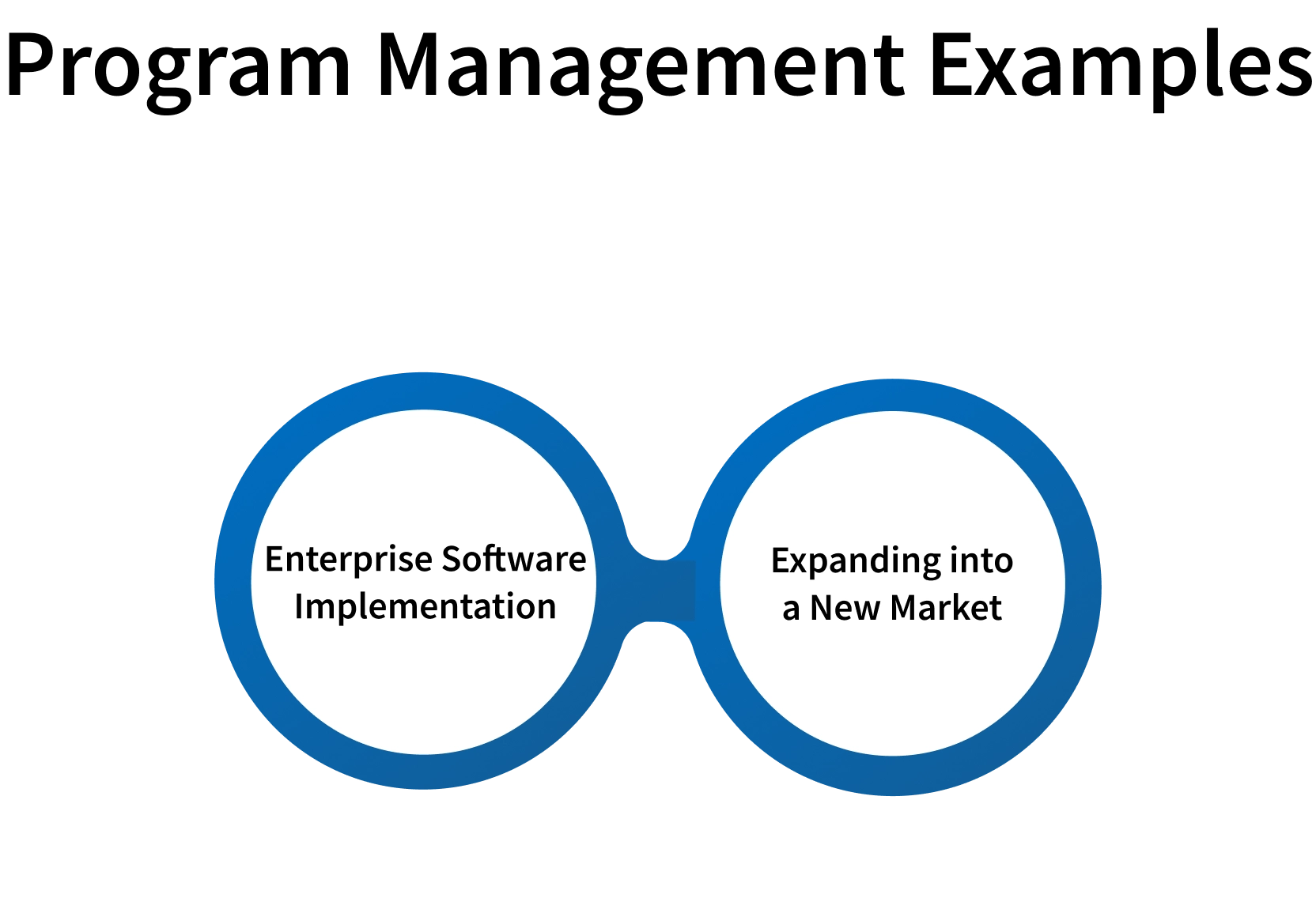
Example 1: Enterprise Software Implementation
Take a scenario where you have decided to implement a new enterprise software system across multiple departments. This includes separate projects such as software development, data migration, user training, and system testing. Program management enables you to unify all these projects into a single plan. When you follow structured steps, you are able to coordinate timelines, assign resources effectively, and track progress in every project.
Using program management techniques helps you identify risks at the initial stage, ensure that all projects align with the overall objective, and maintain clear communication between teams. This helps keep the entire program on track while preventing delays and overlapping efforts.
Example 2: Expanding into a New Market
Whenever you are expanding your business to a new market, you usually have multiple projects that include market research, marketing campaigns, logistics setup, hiring, and legal compliance. Program Management helps you manage these connected projects as a cohesive program. A clear program management process enables you to track interdependencies, manage resources across projects, and make sure every effort supports the overall expansion goal.
Following program management best practices helps you ensure that milestones are met, risks are controlled, and that teams stay aligned throughout the program management life cycle. This structured approach allows you to achieve growth efficiently while keeping all the projects moving in the right direction and successfully reaching the strategic goals of the expansion.
What Are the Best Practices of Program Management?
Effective program management relies on proven practices that keep multiple projects aligned, resources optimised, and goals on track. Here you can see the key best practices to follow.

Set Clear Goals and Outcomes
Begin by clarifying what the program must accomplish and how success will be measured. With specific goals, all the projects move with purpose rather than working with guesses. This focus helps the teams stay focused, minimises unnecessary work and makes the whole process of program management reliable so that every action leads to meaningful outcomes.
Build a Structured Program Management Plan
When you have several projects running simultaneously, a well-organised plan provides you with stability. Layout timelines, milestones, responsibilities, and dependencies in a clear program management plan. Once you observe how all the pieces fit together through the program management life cycle, you are able to seamlessly coordinate work, minimise delays, and adjust quickly when priorities change.
Maintain Strong Communication Across Projects
Clear communication keeps your program on track. Share updates consistently, set expectations early and simple program management techniques will ensure that everyone is informed. When the flow of information between the teams is free, then you avoid confusion, align priorities faster, and keep all the projects moving in the same direction.
Identify and Manage Risks Early
Risks grow fast when several projects depend on each other. At every step of the program, look for potential problems, understand how they could affect your projects, and take action before they cause delays.
Early risk handling helps you protect your timelines, maintain stability, and keep progress steady across the entire program.
Use Resources Wisely Across All Projects
When you see the entire program rather than individual projects, resources become easier to manage. Track availability of time, budget and people on a program level to enable you to balance workloads and avoid bottlenecks. Having a clear overall view is a key advantage of good program management because it ensures each project gets exactly the resources it needs to keep going.
Is Program Management Differ from Project Management?
Yes, program management and project management are not the same. Project management focuses on completing a single task or goal, while program management brings together several related projects to achieve a bigger objective. Program management looks at everything as a whole, makes sure teams work well together, manages shared resources, and keeps all projects on track. Project management focuses on the details of one project at a time. Both matter, but they operate at different levels.
How to Start Managing Programs Effectively Using BIXO?
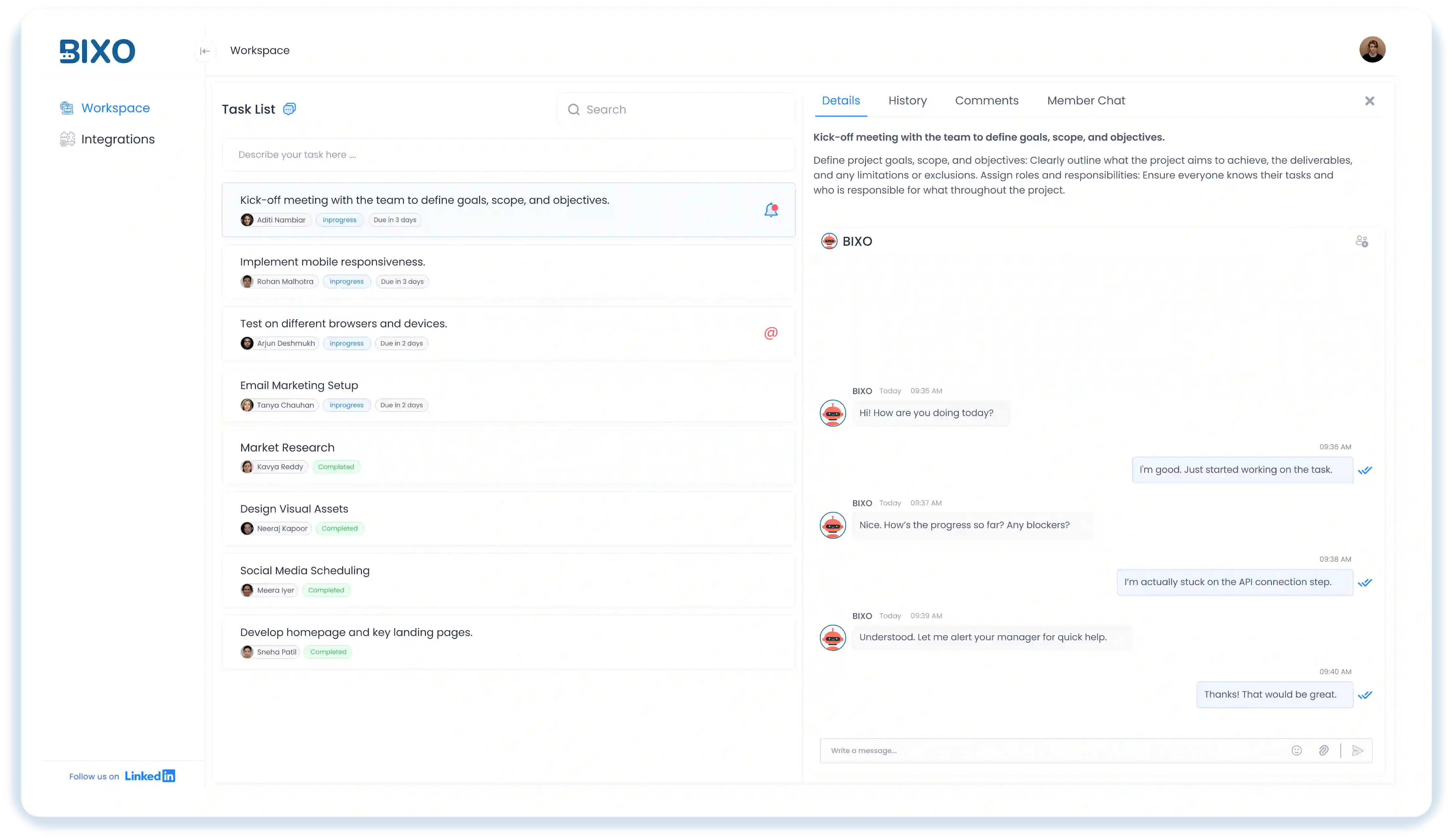
You can manage programs efficiently using BIXO. You no longer spend your day chasing updates or reminding people about deadlines. You add your tasks to the system, and BIXO checks in with your team, tracks progress, follows up on deadlines, and sends you simple summaries. You get a clear view of every project without running constant check-ins. This helps you manage larger teams, handle different areas of work, stay aware of risks, and spend more time on real planning.
BIXO keeps things moving smoothly in the background. It checks on tasks, asks team members about any issues, and alerts you when someone reports a blocker or doesn’t respond. Your team stays aligned without frequent meetings, and you stay focused on guiding the work instead of tracking every update. It saves time, improves productivity, and helps you keep your programs moving steadily as BIXO handles the routine follow-ups for you.
Conclusion
Program management helps you stay organised when handling multiple connected projects. When you understand how it works, follow a clear process, and use practical techniques, your teams stay aligned and focused on the goals. And with the help of tools like BIXO helps reduce risks, make sure every project contributes to the overall objective, and turn complex work into steady, manageable progress.
FAQs
Program management lets you guide several connected projects toward one clear goal. It gives you structure and focus, helps you use resources smartly, manages risks early, and ensures every project supports the bigger objective.
Project management is all about finishing a single project, while program management connects multiple related projects to reach a bigger goal. It keeps teams aligned, shares resources effectively, and makes sure every project moves smoothly in the same direction.
Program management gives you a clear structure, keeps your teams working together, handles risks before they grow, and makes the best use of resources. It helps you stay organised, monitor progress across projects, and reach your goals without losing control of the details.
Start by setting clear goals, creating a well-organised plan, and keeping communication open. Keep an eye on risks, use resources wisely, and follow the program’s phases to coordinate projects smoothly and achieve consistent results.
Get a demo of BIXO

Recommended Blogs
How to Delegate Tasks Effectively: 7 Tips for Managers
Learn how to delegate tasks effectively, save time, and boost team productivity with step-by-step tips, real examples, and smart AI tools.
 Bhuvana Bitra |
 Oct 17, 2025

Project Objectives: A Simple Guide with Real Life Examples
Learn how to set clear project objectives that guide your team, track progress, and ensure success. Get practical tips and real-life examples to get started right.
Tarun Kumar Reddy Atmakuru |
Oct 17, 2025

25 Key Project Management Skills Every Manager Should Master
Learn 25 essential project management skills - soft, hard, and technical to manage teams, meet deadlines, and deliver successful projects.
Tarun Kumar Reddy Atmakuru |
Oct 17, 2025
×
Focus on what matters. BIXO handles the rest!