Table of Content
Focus on what matters. BIXO handles the rest!

Projects often run into trouble when you don’t know how much money is being spent or where the budget is going. This is where project accounting helps. It lets you track every cost clearly so you can catch problems early instead of finding out too late.
With a good project accounting process, you get a clear view of what’s on track and what needs fixing. It becomes easier to manage your budget, adjust plans, and make sure the project finishes smoothly. In this guide, you’ll learn how to do that step by step. You’ll also see how to track costs and stay on budget easily.
What Is Project Accounting?
Project accounting is the process of tracking all financial aspects of a project, including costs, revenues, and budgets separately from general company finances. It helps you ensure projects stay on budget and meet their financial goals.
The purpose of project accounting is to give you a clear understanding of a project’s financial health and help you manage it effectively. Here are the main ways it helps:
- Monitor costs, revenues and budgets per project individually.
- Improve accountability and manage resources efficiently.
Why Is Project Accounting Important?
Project accounting offers many advantages for businesses that want to manage projects efficiently and stay on top of their finances. It is especially useful for organisations managing multiple projects across different teams or departments. Here are some reasons why project accounting is important:
Here are some reasons why project accounting is important:
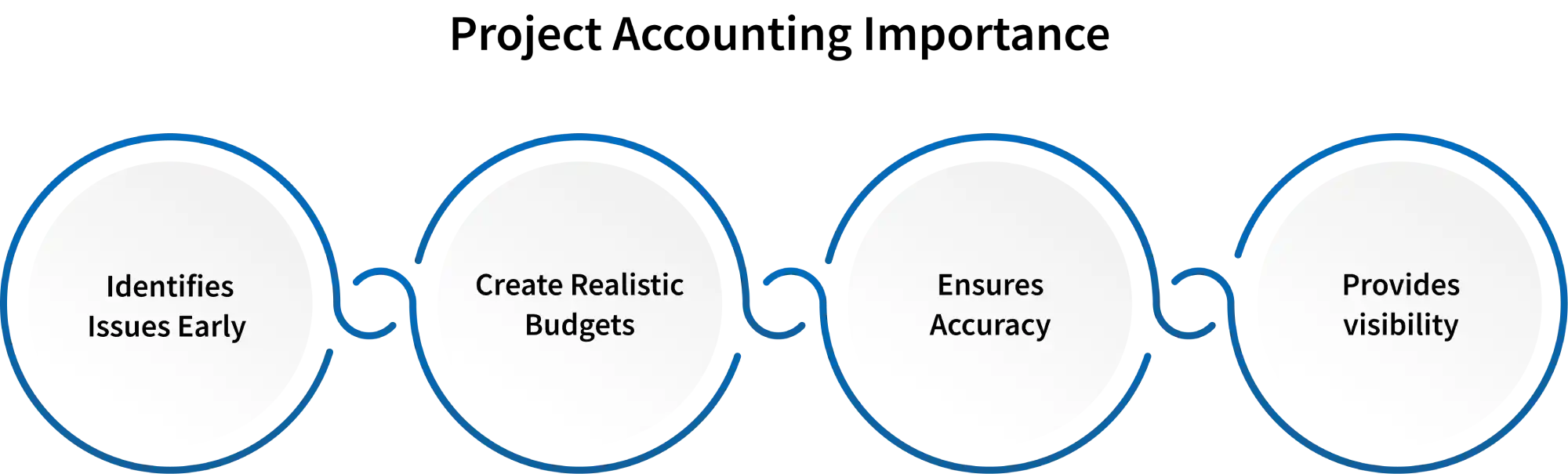
Identifies Issues Early
By keeping track of your project’s finances, you can spot overspending or wasted resources early. This allows you to address issues as soon as they appear. Acting quickly ensures your project stays on track and runs smoothly.
Create Realistic Budgets
Knowing past and current expenses makes it easier to set budgets that actually work. You’ll be able to plan resources better and finish projects without stressing about money. It also gives you the confidence to make decisions without guessing or worrying about unexpected costs.
Ensures Accuracy
Project accounting helps you keep your financial information in a clean and organised manner. It allows you to monitor billing, costs, and revenue accurately and helps you know the true financial status of your project. You can stay on budget and identify problems before they become bigger issues.
Provides Visibility
By monitoring the expenses, revenues and budgets of each project will enable you to see exactly where your resources are going. This clear view helps you to make better decisions, plan better and ensure that your project is on the track.
What Are the Key Functions of Project Accounting?
Project accounting helps you manage your project’s money more effectively. Here are the key functions that guide you through the process.
Budgeting and Forecasting
You set a clear budget at the start and keep an eye on your spending as the project moves forward. This helps you stay within limits and fix things before money becomes a problem. Forecasting also gives you an idea of what your future costs might be.
Cost Tracking and Control
You can track all project expenses, including labour, materials, tools, travel, and other costs, carefully. Keeping an eye on your total spending helps you spot overspending early and fix issues before they grow. It also shows where your money is going and where you can save.
Financial Reporting and Analysis
Frequent updates show the amount of money you planned to spend and the amount you used. They also point out your profits and progress. With these reports you can easily see what is going on, what is to be fixed, and what to do next.
Resource Management
You can monitor how your team, equipment, and materials are being used. This helps you avoid assigning over work to the people, wasting resources, or missing deadlines. It also makes it easier to plan for the next stages of the project.
Profitability Analysis
By comparing what you spend with what you earn on a project, you can see whether it is truly profitable. This helps you understand which projects give better returns, which ones drain your budget, and how you should price similar projects in the future. It also guides you in choosing the kind of work that benefits your business the most.
How Does the Project Accounting Work?
Project accounting tracks your project’s money from start to finish, showing how the budget is used and whether the project is financially on track. It also supports your project management plan and keeps work running smoothly.
Here is an easy step-by-step process:
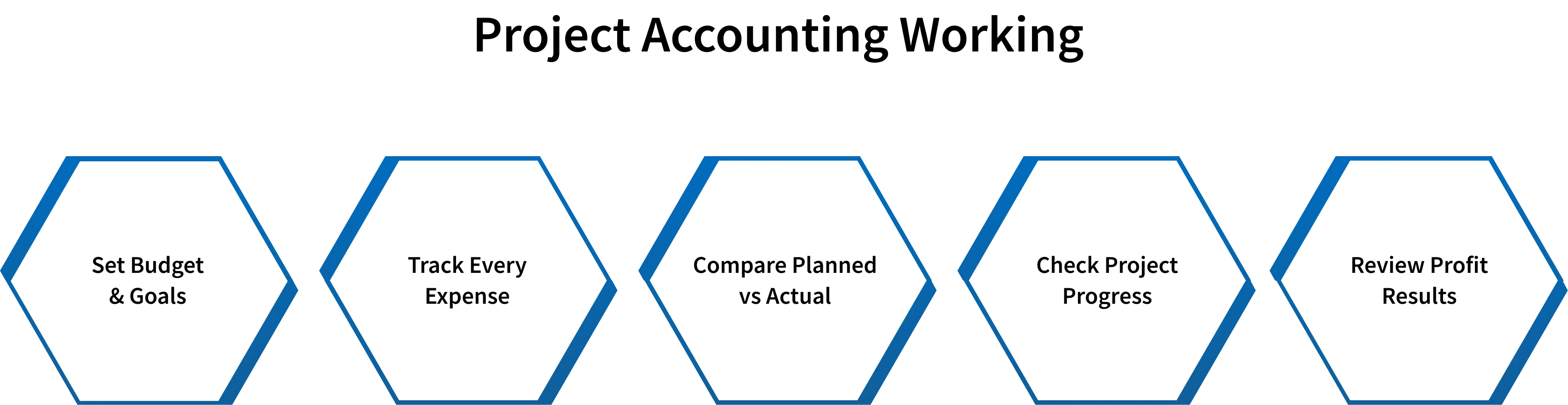
Set the Budget and Goals
Start by identifying the project’s financial needs, the expected costs and desired results. A clear budget and goals give you a reference point to compare actual spending later. This step also helps you plan resources effectively and set realistic expectations for your team and stakeholders.
Track All Expenses
Record every cost as it happens, including labour, materials, equipment, and any extra expenses. Tracking expenses in real time helps prevent overspending, keeps financials transparent, and ensures nothing is overlooked.
Compare Planned vs. Actual Spending
Compare the actual spending with the initial budget frequently. This helps you spot areas where costs are rising too much, so you can adjust early and keep the project financially healthy. It also helps maintain financial control and ensures the project stays on track.
Monitor Progress
Monitor the performance of the project by reviewing the amount of work completed and the amount spent. The frequent updates help you spot delays, resource issues, or areas that need improvement. This makes the project running smoothly and within budget.
Review Profitability
At the end of a project, compare the total costs with the total revenue to see if it was profitable. This helps you identify which types of projects are most valuable, refine pricing strategies, and make better decisions for future projects.
How Does Project Accounting Differ from Financial Accounting?
Project accounting tracks and manages the financial aspects of projects, including costs, budgets, revenues, and resource allocation, to ensure profitability and financial control across one or multiple projects. It tracks things like costs, time, and resources so you can manage the project day-to-day and keep it on budget.
Financial accounting looks at the finances of the whole business. It covers overall income, expenses, and profit, and is usually updated monthly or yearly.
In simple terms, project accounting tracks the costs, revenues, and resources of projects to keep them on budget. Financial accounting looks at the overall finances of the entire business.
How BIXO Enhances Project Accounting and Team Productivity?
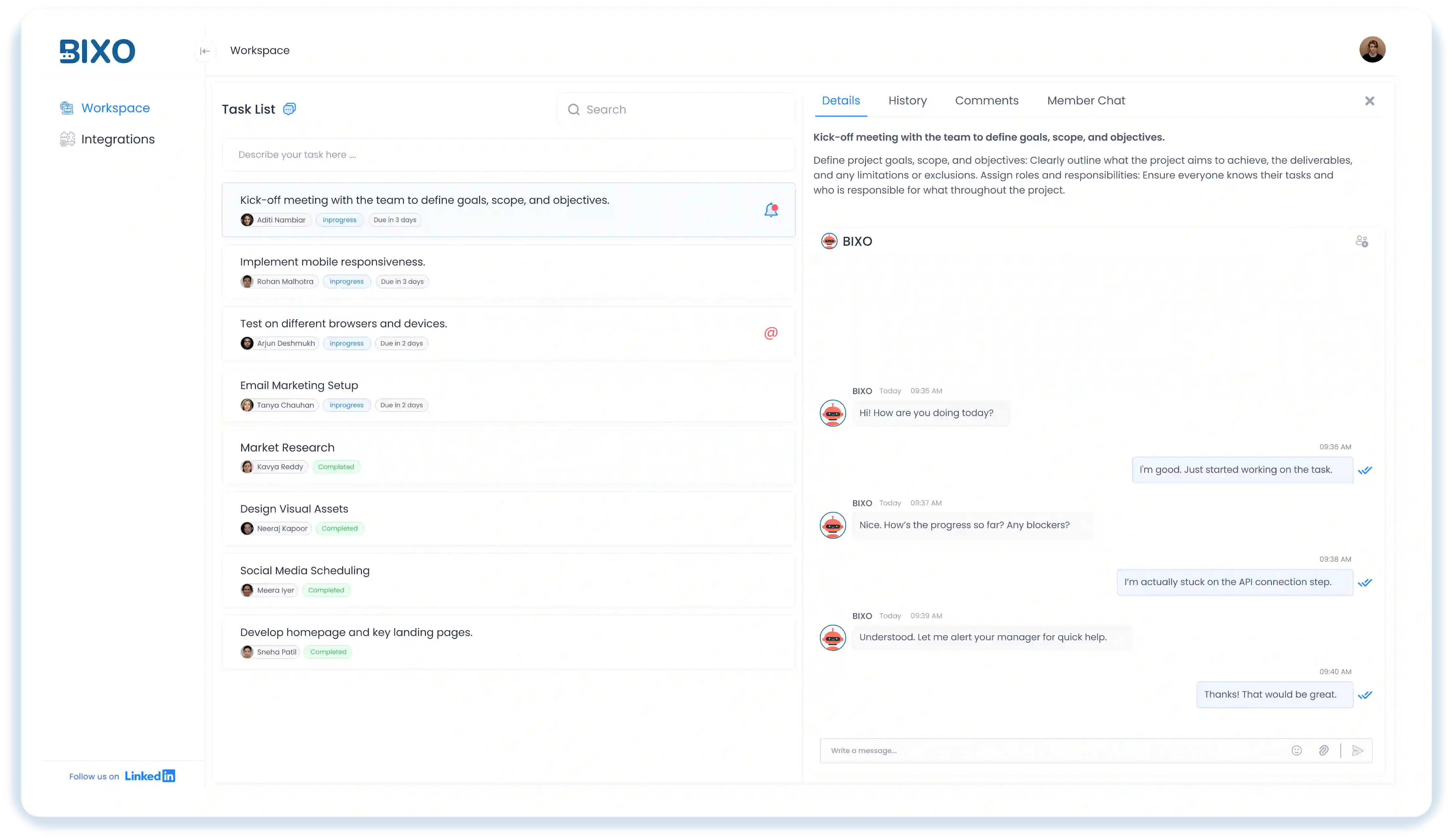
Keeping track of tasks, progress, and time spent on each activity can be challenging without proper project accounting. BIXO provides real-time updates and insights, helping you see how work is progressing and where delays or extra effort might affect timelines and costs. This visibility makes it easier to understand the true effort behind each project, allocate resources wisely, and keep your team productive while staying aware of possible budget effects.
BIXO also improves the way your team works. It sends task reminders automatically, reduces delays, and keeps everyone updated about what they need to do. This avoids confusion and last-minute rush, making daily work smoother. With better coordination, your team becomes more productive while you get a clearer picture of your project’s financial status.
Conclusion
Project accounting gives you a clear view of your project’s costs, progress, and financial health. It helps you stay organised, avoid overspending, and make smarter decisions as the project moves forward. When combined with tools like BIXO, managing tasks and tracking real-time updates becomes much easier. This keeps your team productive and your projects more successful from start to finish.
FAQs
No. Any business that runs projects, small or big, can use project accounting to avoid overspending and improve planning.
You can use spreadsheets, but tools like BIXO make the process easier by giving real-time updates on tasks, time, and project progress.
Yes. When you know where your money is going, you can fix issues early and keep your project on track.
The main goal is to track a project’s costs, time, and resources so you always know whether the project is on budget and on the right path.
Get a demo of BIXO

Recommended Blogs
Project Management Triangle: Managing the Triple Constraints
Master the project management triangle by balancing scope, cost, and time with simple strategies that drive successful outcomes every time.
 Jahnavi Chintakrindhi |
 Oct 13, 2025
How to Delegate Tasks Effectively: 7 Tips for Managers
Learn how to delegate tasks effectively, save time, and boost team productivity with step-by-step tips, real examples, and smart AI tools.
Bhuvana Bitra |
Oct 17, 2025
Project Initiation: Key Steps, Best Practices, & Mistakes to Avoid
Learn what project initiation is, why it matters, key steps to follow, best practices to apply, and mistakes to avoid for a strong and successful project start.
×
Focus on what matters. BIXO handles the rest!