
Table of Content
Focus on what matters. BIXO handles the rest!

Projects often run into trouble when teams ignore basic project management practices. Most of the time, problems happen because people miss small details, not because they make one big mistake.
When that happens, stress begins to rise, misunderstandings spread, schedules start falling behind, and people blame each other. Then the project becomes harder to manage than it should be. It feels like you are constantly fixing issues instead of moving forward.
But it does not have to be this way. When you apply simple project management practices, work becomes easier. With clear communication and realistic planning, projects stay organised and move forward more smoothly.
In this blog, you will explore the 10 best practices of project management that help you avoid confusion, stay on track and increase the chances of delivering successful results.
What Are the 10 Best Practices for Project Management?
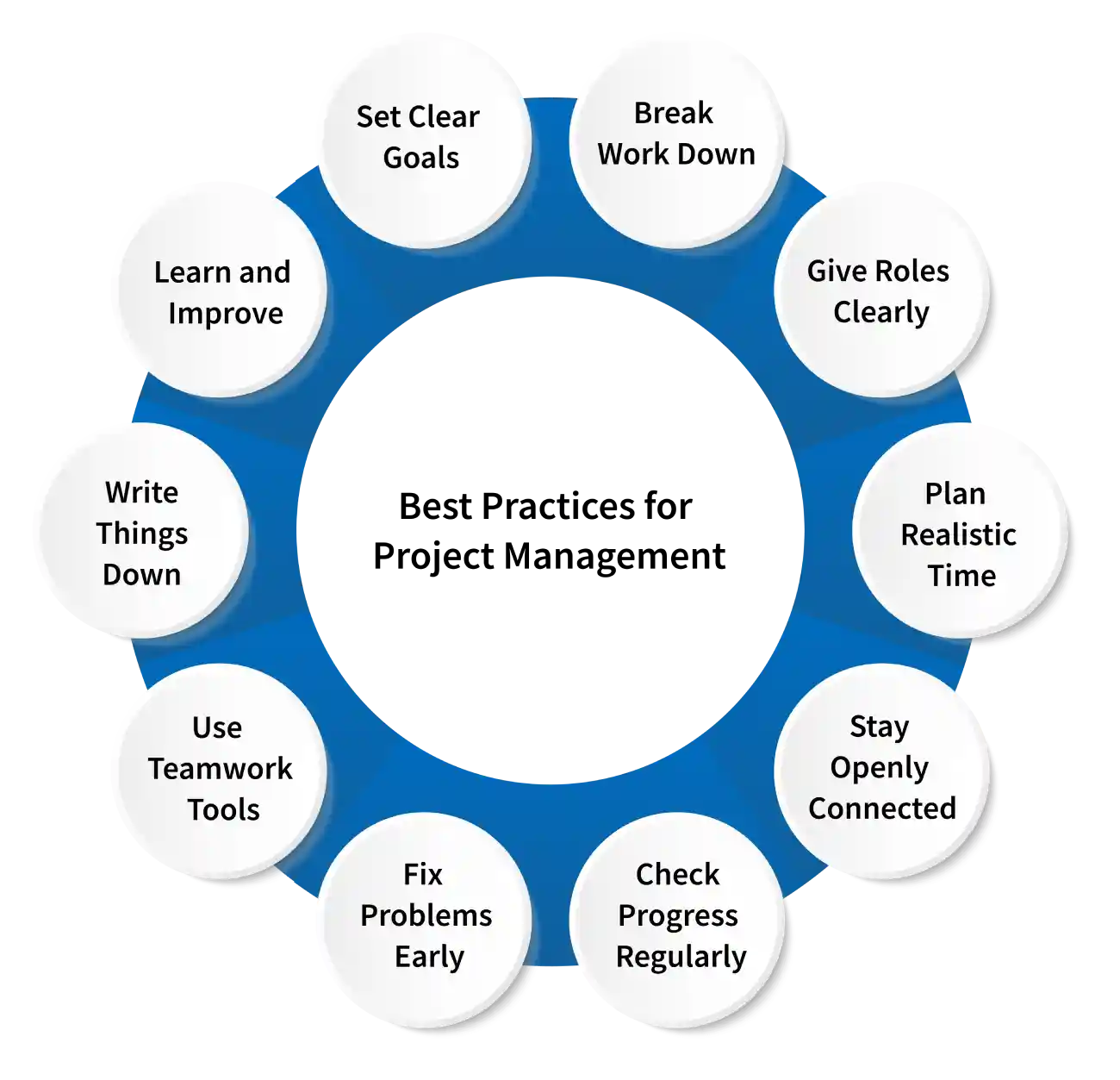
Focusing on core principles helps you apply project management best practices effectively. So here are 10 project management best practices that help you stay organised, reduce misunderstandings and finish your work with better results.
1. Define Project Goals and Scope Clearly
Clear project goals define the purpose and expected outcome of a project. When you set clear objectives, you can guide your team effectively. Decide what success looks like, break it into measurable steps, and share it with your team so everyone stays focused. In fact, according to Zippia, 50% of projects fail because of poor requirements and unclear initial requirements, showing how important clear goals are to avoid confusion and keep the project on track.
2. Break Big Work into Smaller Steps
Sometimes large projects may be overwhelming, but it is easy to remember by breaking them into smaller steps. You can see the progress and understand what should be done next easily. It also reduces stress and makes the work easier to manage. It keeps the project moving steadily.
3. Assign Responsibilities Properly
Before starting a project, make sure you know exactly what success looks like. When everyone on the team knows the goals, it’s easier to stay on track and work together. Clear project objectives help avoid unnecessary time and work. Make sure your team knows exactly what they need to do from the very beginning. This makes it easier to reach the project’s targets without confusion.
4. Create Realistic Timelines
Realistic timelines show how long tasks should take. According to McKinsey & Company’s research, teams exceeded their budgets on half of all large IT projects by an average of 45%, showing how often they underestimate timelines and costs. Giving your team reasonable deadlines and leaving some extra time for unexpected problems helps your team stay focused and less stressed. It also avoids last-minute rushes.
5. Keep Communication Clear
Communication defines how information flows within your team. You must provide updates, feedback and questions regularly. Using a shared space for messages and files helps everyone stay informed. Open communication helps reduce mistakes and makes teamwork smoother.
6. Track Progress Continuously
Monitor tasks and milestones regularly to catch issues early. You can make adjustments before small problems turn into big delays. Continuous tracking keeps everything on schedule, and regular check-ins simplify the process of leading the team and maintain momentum. Tools like BIXO help you by providing real-time updates, reminders, deadline tracking and progress tracking, so you always know where your team stands and what needs attention.
7. Spot Problems Early Instead of Reacting Late
Regularly tracking progress helps you stay aware of what’s happening in the project. When you keep an eye on how work is moving, you notice issues easily before they turn into major problems. This gives you time to step in, adjust plans, or help someone who is stuck. Fixing things early saves time, avoids stress, and keeps your project moving in the right direction.
8. Use Tools that Help Teamwork
Tools define the environment where you share tasks, files, and updates easily. By using collaborative platforms, you can organise information in one place. And you can also make it easier for the team to communicate and access what they need. Using proper tools improves teamwork, saves time and reduces confusion. BIXO supports this by tracking tasks in real time, sending reminders, and providing progress updates, so your team stays on track and handles every task.
9. Document Everything
Writing down things helps you avoid confusion later. When you document plans, decisions, updates, and changes in one place, you don’t have to rely on memory or repeat the same conversations. Clear records make it easier to track progress, clarify decisions, onboard new team members, and keep everyone aligned. Good documentation saves time and stops mistakes before they happen.
10. Learn from Every Project
Learning from past projects helps you refine your approach for future ones. After finishing every project, you should review what worked well and what didn’t. You can use these insights to make smarter decisions and avoid repeating the same mistakes again in future. Continuous learning helps you run projects better each time.
Conclusion
Following these best practices in your project management helps you in keeping the projects on schedule, reducing confusion and increasing the effectiveness of the team. Setting clear goals, tracking progress, communicating openly, and using the right tools like BIXO help prevent mistakes and reduce stress. By documenting decisions and learning from every project, you can improve each time and achieve better results with less effort.
FAQs
Project management practices make teamwork easier by giving everyone clarity on roles, deadlines, and goals. When people know what to do and when to do it, collaboration improves, and results get better.
In project management, documentation gives everyone a shared reference, prevents confusion, and makes it easier for people to understand what’s happening without asking again.
Not all projects require tools or software, but using them can make project management much easier. You can manage smaller projects with simple checklists or notes, while larger or team-based projects benefit from tools that help plan, track progress, communicate, and document work.
Start small, stay consistent, and lead your team by example. When you implement these practices in your workflow, your team will automatically start following. Encourage them, provide guidance when needed, and celebrate small improvements to build long-term habits.
Get a demo of BIXO

Recommended Blogs

SWOT Analysis: The Four Key Parts with Practical Examples
Want to make smarter business decisions? Understand your business with a SWOT analysis, covering strengths, weaknesses, opportunities, and threats.
 Bhuvana Bitra |
 Oct 17, 2025
How to Delegate Tasks Effectively: 7 Tips for Managers
Learn how to delegate tasks effectively, save time, and boost team productivity with step-by-step tips, real examples, and smart AI tools.
Bhuvana Bitra |
Oct 17, 2025

Project Initiation: Key Steps, Best Practices, & Mistakes to Avoid
Learn what project initiation is, why it matters, key steps to follow, best practices to apply, and mistakes to avoid for a strong and successful project start.
Tarun Kumar Reddy Atmakuru |
Oct 17, 2025
×
Focus on what matters. BIXO handles the rest!