Table of Content
Focus on what matters. BIXO handles the rest!

When team members scatter their tasks or misunderstand their responsibilities, projects quickly fall behind. You face unnecessary problems and feel the pressure grow with every delay, making the work heavier than it needs to be.
A project management checklist helps you take control. You organise tasks clearly, keep everyone aligned, and drive your project forward with confidence.
In this blog, you will explore how to create a project management checklist in 10 practical steps. You will also learn how to manage work with clarity and reduce stress along the way.
What Is a Project Management Checklist?
A project management checklist is an easy-to-use tool that lists all tasks, deadlines, and responsibilities in a project. It lets you track progress, assign work, and make sure you don’t miss anything, keeping the whole project on track.
A checklist in projects also assists you in keeping your team aligned, reducing mistakes, and saving time on correcting missed issues. It breaks a complicated project into small, manageable steps, which allow you to have control and confidence as you move from start to finish.
Why Is the Project Management Checklist Important?
A project management checklist gives structure to your work and helps you stay in control when tasks and timelines start to overlap. It keeps everything organised, visible, and moving in the right direction.
- Clear direction from start to finish: Each task follows a defined order, so you always know what to do next.
- Fewer missed tasks and details: Key steps stay visible, reducing the risk of overlooking important work.
- Clear roles and ownership: Well-defined responsibilities prevent confusion and avoid repeated follow-ups.
- Less rework and wasted time: The team identifies issues early and avoids wasting time fixing mistakes later.
- Easy progress tracking: Project status remains clear, making it easier to spot delays and take action on time.
- Lower stress near deadlines: With everything planned and tracked, work feels more manageable, and deadlines stay under control.
How To Create a Project Management Checklist in 10 Steps?
Managing projects becomes difficult when planning is poor and steps are unclear. In fact, 39% of projects fail for this exact reason, according to recent project management statistics. That number shows how quickly work can go off track.
When you don’t define steps clearly, confusion arises. You delay tasks, shift priorities, and let small issues grow into bigger problems. This is where a project management checklist becomes essential. It gives clear structure to your work, keeps everyone aligned, and helps you stay in control from project start to end.
Here are the key steps you should include in your project management checklist to keep your project moving forward smoothly.
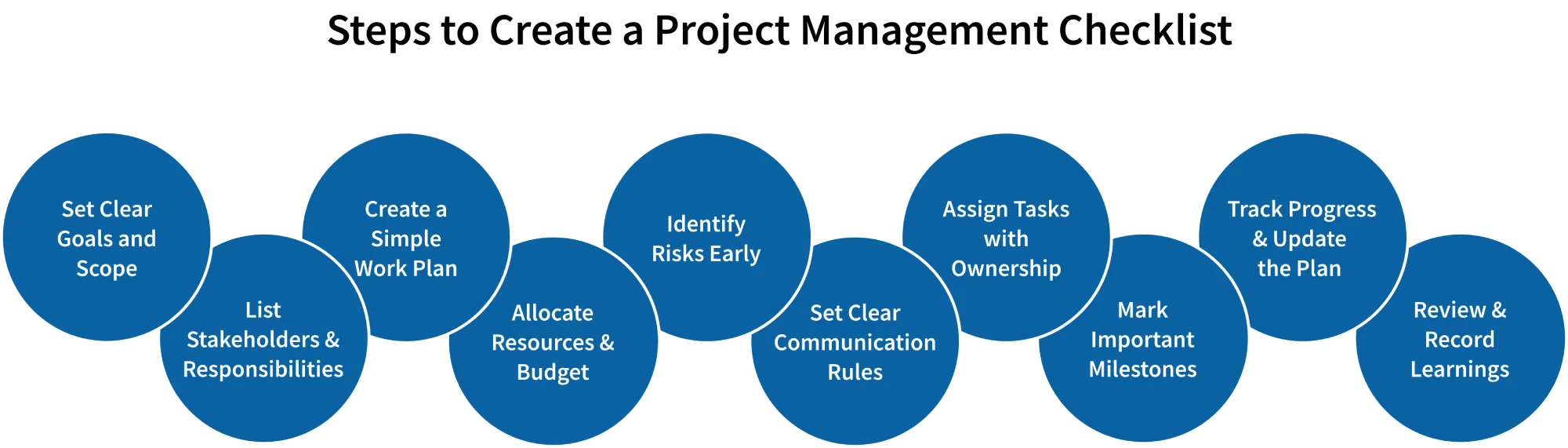
Step 1. Set Clear Goals and Scope
When you set goals and a scope for your project clearly, you are on the right path. Clearly state what you want to achieve and what tasks are part of the project. This eliminates confusion and keeps your team focused. With a clear scope, you do not have to do extra work that slows down the project.
Step 2. List Stakeholders and Responsibilities
List all the people involved in the project and their roles. This brings clarity and prevents confusion while making important decisions. When you define roles clearly, people know what they need to do. It also helps you share updates with the right people and keeps the project moving smoothly.
Step 3. Create a Clear Work Breakdown Structure
Divide the project into smaller tasks and put them in a clear sequence. Add the timelines that match the actual effort required. A simple plan shows you the next steps clearly. It is the one that guides your team and ensures that your project is running at a consistent speed without confusion.
Step 4. Allocate Resources and Budget
Estimate the people, tools, and funds you need for each task. Make sure everything is available before the work begins. The project moves forward without any delays when the resources are ready. This also prevents last-minute issues that disrupt your schedule and increase your workload.
Step 5. Identify Risks Early
Consider anything that might slow the project or cause trouble. List all these risks and determine how you are going to deal with them. Being ready early makes you calm whenever there is a problem. Risk planning is useful to protect the deadlines and avoid unwanted pressures.
Step 6. Set Clear Communication Rules
Determine the method of sharing updates and tracking progress. Select the best way that all can easily follow. Clear communication reduces misunderstandings and makes teamwork smoother. It also makes you aware of progress and enables you to recognise issues at the appropriate time.
Step 7. Assign Tasks with Ownership
Assign one individual to each task and make them take full responsibility for completing it. This makes tracking progress easy because you are aware of whom to check with. Ownership builds clarity and avoids scenarios of leaving tasks without action. When everyone is aware of their exact role, work becomes quicker.
Step 8. Mark Important Milestones
Mark milestones in your timeline to check the progress. These points allow you to pause and see whether the work is proceeding as intended. The milestones assist you in identifying problems early and adjusting your plan where necessary. They maintain the project in a steady state and assist in improved decision-making.
Step 9. Track Progress and Update the Plan
Focus closely on what your team has completed and what still needs doing. Write any issues that you find and adjust your plan when necessary. Using tools like BIXO, you can get real-time updates on task progress, making it easier to stay in control. Automated updates through BIXO keep the project running smoothly and prevent bigger issues from building up.
Step 10. Review, Record Learnings, and Seek Approvals
At the end of the project, review what worked well and what needs improvement. Record these learnings clearly so your team can refer to them in future projects. Share your findings with stakeholders for review and approvals to ensure alignment and accountability. Learning from each project strengthens your planning, smoothens workflow, and builds confidence over time.
How BIXO Strengthens Your Project Management
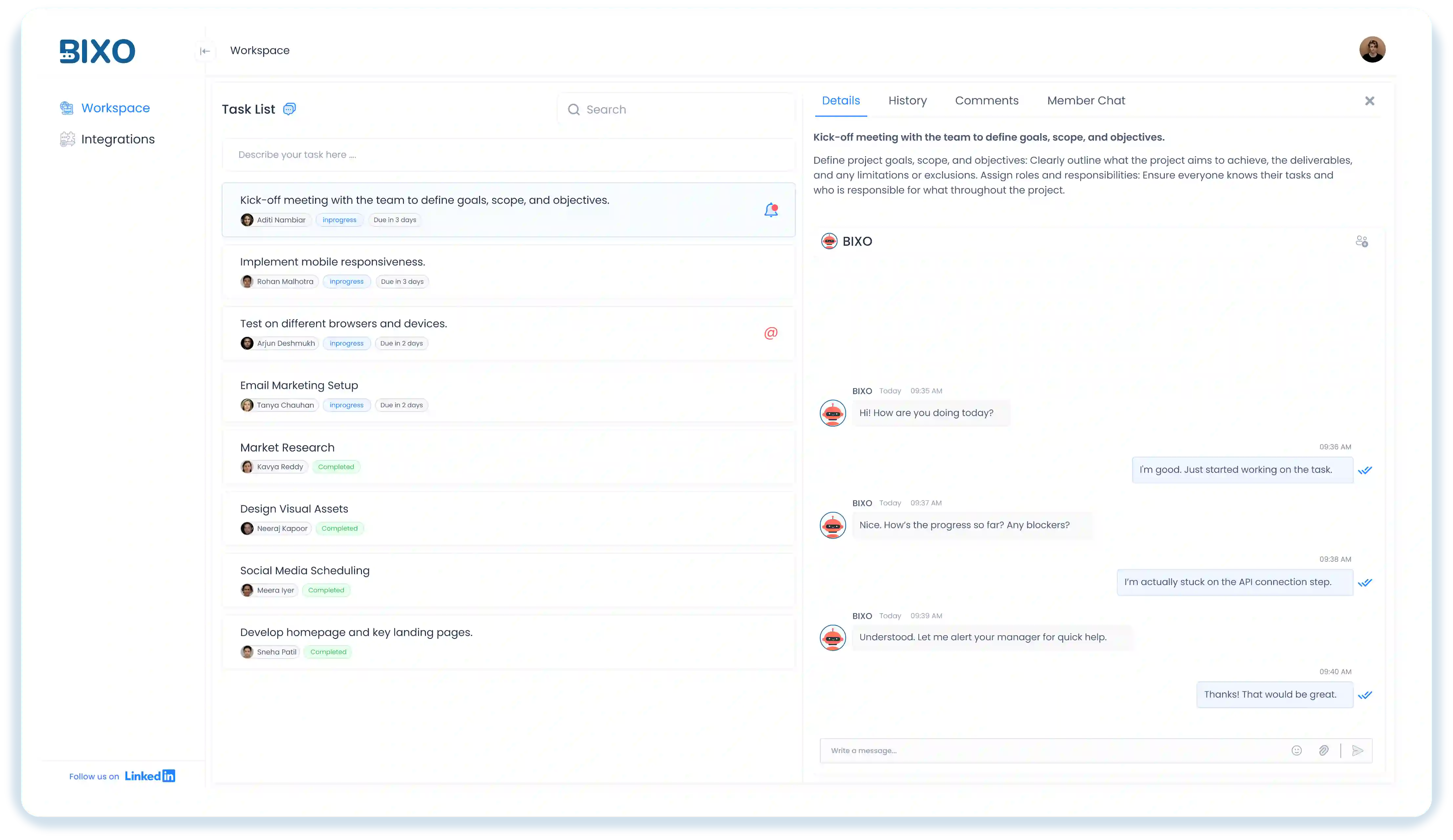
Keeping track of tasks, chasing team members, and meeting deadlines can be overwhelming even for the most organised managers. BIXO changes that. It makes managing projects simpler and more efficient, even for large teams. It automates team follow-ups, tracks task progress, sends smart notifications, and adapts to your workflow, giving you a clear view of progress without unnecessary meetings.
By handling routine follow-ups, BIXO saves time, reduces stress, and boosts productivity, letting you focus on decisions, planning and strategy that drive your project forward.
Conclusion
By following this project management checklist, you take control of your project and keep everything on track. Clear project goals, defined roles, and regular monitoring help you catch issues early and adjust quickly. You keep track of project tasks, deadlines, and responsibilities, reduce last-minute stress, and ensure project progress is visible. Each step makes your project workflow smoother and builds confidence in delivering results efficiently and on time.
FAQs
Start by listing clear goals, defining tasks, assigning responsibilities, setting deadlines, and identifying risks. Organise the project into smaller steps and milestones to monitor progress and adjust work when required.
Yes. By clarifying roles, responsibilities, and communication rules, a checklist keeps everyone aligned. It reduces misunderstandings, keeps tasks on schedule, and strengthens teamwork throughout the project.
Review and update it regularly as tasks progress, issues arise, or priorities shift. Frequent monitoring ensures progress is visible, prevents delays, and helps you adjust plans quickly for smoother project execution.
Avoid unclear goals, vague task assignments, ignoring risks, and skipping progress reviews. Overlooking these can cause delays, miscommunication, and confusion, reducing the checklist’s effectiveness.
Get a demo of BIXO

Recommended Blogs
How to Delegate Tasks Effectively: 7 Tips for Managers
Learn how to delegate tasks effectively, save time, and boost team productivity with step-by-step tips, real examples, and smart AI tools.
 Bhuvana Bitra |
 Oct 17, 2025

Project Objectives: A Simple Guide with Real Life Examples
Learn how to set clear project objectives that guide your team, track progress, and ensure success. Get practical tips and real-life examples to get started right.
Tarun Kumar Reddy Atmakuru |
Oct 17, 2025
25 Key Project Management Skills Every Manager Should Master
Learn 25 essential project management skills - soft, hard, and technical to manage teams, meet deadlines, and deliver successful projects.
Tarun Kumar Reddy Atmakuru |
Oct 17, 2025
×
Focus on what matters. BIXO handles the rest!