Table of Content
Focus on what matters. BIXO handles the rest!

Managing multiple projects at the same time can overwhelm you, especially when key tasks conflict and your team has limited resources. Project portfolio management helps you get a clear view of all your projects and decide what truly deserves your attention. It lets you control priorities, budgets, and results by keeping everything organised.
When done correctly, you can align every project with your business objectives, reduce unnecessary work, and make better decisions in less time. You stop spending all your time fixing problems and begin to lead with clarity and confidence.
In this blog, you will understand what project portfolio management is and why it matters. You will also learn the process, key components, benefits, and how the right tool can help you manage your project portfolio effectively from start to finish.
What Is Project Portfolio Management?
Project portfolio management is how you manage all your projects as a list rather than individually. It helps you see all the active and planned projects in one place to see what is running, what is coming next, and how each project fits your overall objectives.
It involves choosing the right projects instead of handling day-to-day activities. You can decide which projects move forward, which ones should wait and which ones should stop. This allows you to manage your time, budget, and effort effectively, so each project has a clear purpose and direction.
Why Is Project Portfolio Management Important?
Managing projects individually may seem efficient, but it often hides bigger problems. Costs rise quickly when decisions happen in isolation and priorities clash. Studies show organisations waste around $109 million for every $1 billion spent on projects that fail to meet their goals. This happens when teams manage projects without aligning them to strategy and treat each project as a separate effort instead of managing them as a connected portfolio.
Project portfolio management brings everything into one view, so decisions happen with clarity. Here you can know why managing projects as a portfolio improves focus, control, and results across your organisation.
- Strategic Alignment: Every project stays connected to your long-term goals, so you avoid pulling the organisation in different directions.
- Clear Project Prioritisation: You focus time and effort on high-value projects and pause or stop work that delivers less impact.
- Smarter Resource Usage: By balancing workloads and budgets, you reduce burnout and prevent unnecessary spending.
- Faster, Confident Decisions: With clear visibility, you decide which projects to start, delay, or close without relying on assumptions.
- Early Risk Visibility: You spot potential issues early and act before they affect multiple projects.
- Complete Portfolio Transparency: You see active, planned, and struggling projects in one clear, unified view.
- Stronger Business Results: By tracking performance across projects, you adjust quickly and stay on course.
What Are the Key Components of Project Portfolio Management?
When you understand the key components that make your project portfolio work, it becomes much easier to manage it. These components help you prioritise projects, allocate resources wisely, track progress, and make better decisions. Now, we will go through the key elements to assist you in organising your projects efficiently and staying on top of everything.
Project Selection and Prioritisation
You begin by deciding which projects to work on and which to pause or stop. This ensures your team works on initiatives that align with your business objectives and offer the highest value. Prioritisation also helps eliminate wastage of effort and resources, as you can concentrate on projects that will truly move the organisation.
Resource Management
Balancing the work of your team, budget, and tools is crucial. Resource management helps you assign the right people to the right projects, avoid overloading anyone, and make sure each project gets what it needs to be successful. Efficient allocation of resources ensures the timely execution of projects and avoids burnout.
Portfolio Governance
Portfolio governance establishes the rules and processes of project management. It guarantees uniform decision-making, accountability, and strategic alignment. You can easily identify problems, implement standards, make decisions confidently, and keep all projects under control with good governance.
Risk Management
Early risk identification and mitigation helps protect your projects from unexpected issues. Risk management allows you to plan for uncertainties, reduce potential setbacks, and act proactively. This ensures that your projects are on track and that minor problems do not escalate into major disruptions.
Performance Monitoring and Reporting
It is necessary to track progress and measure outcomes. Performance monitoring lets you see which projects are succeeding, which need attention, and where adjustments are necessary. Regular reporting gives you a clear picture of your portfolio, so you can act quickly and ensure every project delivers results.
Strategic Alignment
Any project must connect to your overall business objectives. Strategic alignment makes sure that your projects are all moving the organisation in one direction, not dragging it in different directions. This element will keep you on track to make better decisions and achieve outcomes that have the greatest impact on your organisation.
What Are the Key Steps in Project Portfolio Management?
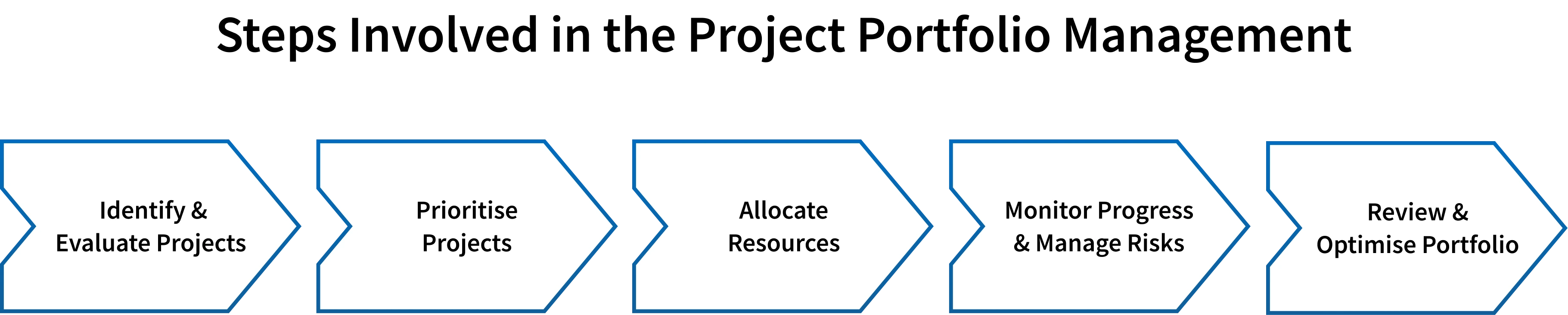
Managing multiple projects is not only about tracking the tasks but also making strategic choices at each stage. By following these key steps, you will focus on the right projects, use resources efficiently and keep your portfolio on track to deliver value continuously.
Identify and Evaluate Projects
Begin with a list of all ongoing and proposed projects in one place. Then evaluate each project on the basis of how it aligns with your objectives, its expected benefits, costs, and potential risks. This is to make sure that you are working on high-value projects and not wasting time or resources on work with low impact.
Prioritise Projects
Prioritise projects based on strategic importance and potential impact. Prioritisation helps you focus resources on high-value initiatives first and lets you pause or postpone lower-priority projects. This keeps your portfolio concentrated on projects that truly move the organisation forward.
Allocate Resources
Assign the right people, budget, and tools to each project. Proper resource allocation balances the workloads, prevents burnout, and helps projects get what they need to be successful. Using resources wisely contributes to the management of timelines and budgets.
Monitor Progress and Manage Risks
Monitor each project's milestones, performance, and budgets and proactively identify risks. Tracking progress will allow you to spot delays or bottlenecks in their early phases, and risk management will ensure that small-scale problems do not escalate into major problems. This keeps your portfolio running smoothly and prevents surprises.
Review and Optimise Portfolio
Periodically assess the portfolio's overall performance and alignment with business goals. Decide which projects to continue, pause, or stop depending on results and changing priorities. Regular reviews ensure you use resources effectively and that all projects deliver maximum value to the organisation.
What Are the Benefits of Project Portfolio Management?
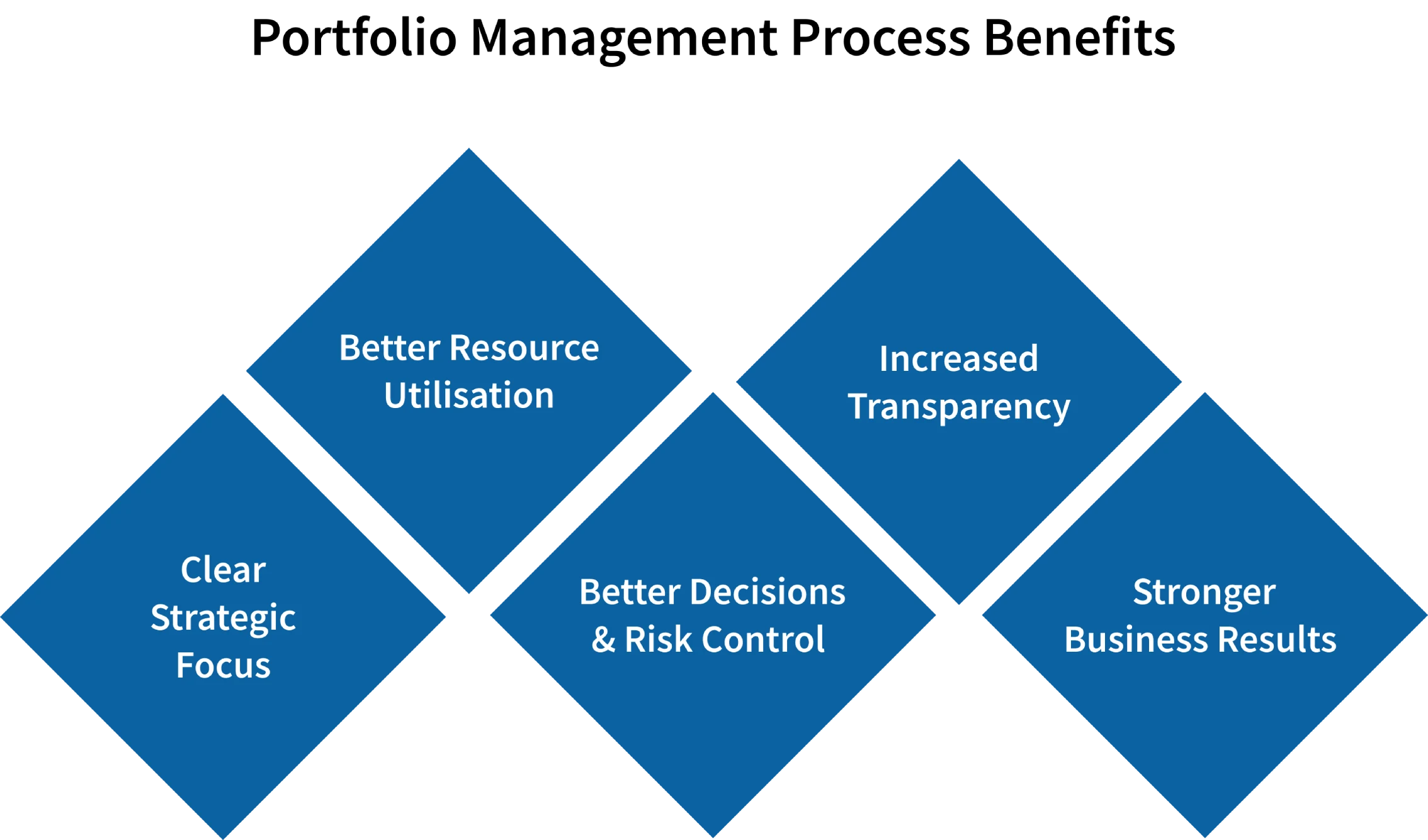
Project portfolio management (PPM) helps you see the full picture of all your projects simultaneously. It provides you with control, clarity, and confidence to make a decision that actually matters. A connected portfolio allows you to concentrate on the right projects, to utilise resources effectively, and to produce better results in your organisation.
Clear Strategic Focus
PPM ensures every project aligns with your overall business goals. You do not waste time and energy on work with low-impact outcomes, but focus on the initiatives that truly move your organisation. Keeping your strategy in mind, you guide your team to achieve meaningful results and keep resources focused on aligned projects.
Better Resource Utilisation
You get the full picture of workloads, budgets, and team capacity. PPM helps you assign resources where they matter most and prevents overload and burnout. Efficient use of people, time and money maximises output and minimises waste and makes sure that each project receives the support it deserves to achieve success.
Informed Decision-Making and Risk Management
PPM provides you with visibility into project performance, risks, and project progress. You make faster, confident decisions on what projects to initiate, postpone, or discontinue with correct, real-time information. By preventing future issues, you work ahead of time, maintain time frames, and protect budgets, so that projects do not get behind schedule.
Increased Transparency
PPM gives a clear view of all the active, planned and struggling projects. Monitor performance, deadlines, and resource allocation all in one place. Such transparency builds accountability and improves communication across teams. It also makes it easy to explain project progress to stakeholders and make informed decisions, keeping everyone aligned and on track.
Stronger Business Results
PPM can make you deliver results that are measurable by linking strategy, resources, and execution. You are able to optimise priorities, minimise wasted effort, and make each project count towards the goals of your organisation. As you monitor and align consistently, you increase efficiency, enhance ROI, and drive overall performance.
Why Choose BIXO As Your Project Portfolio Manager?
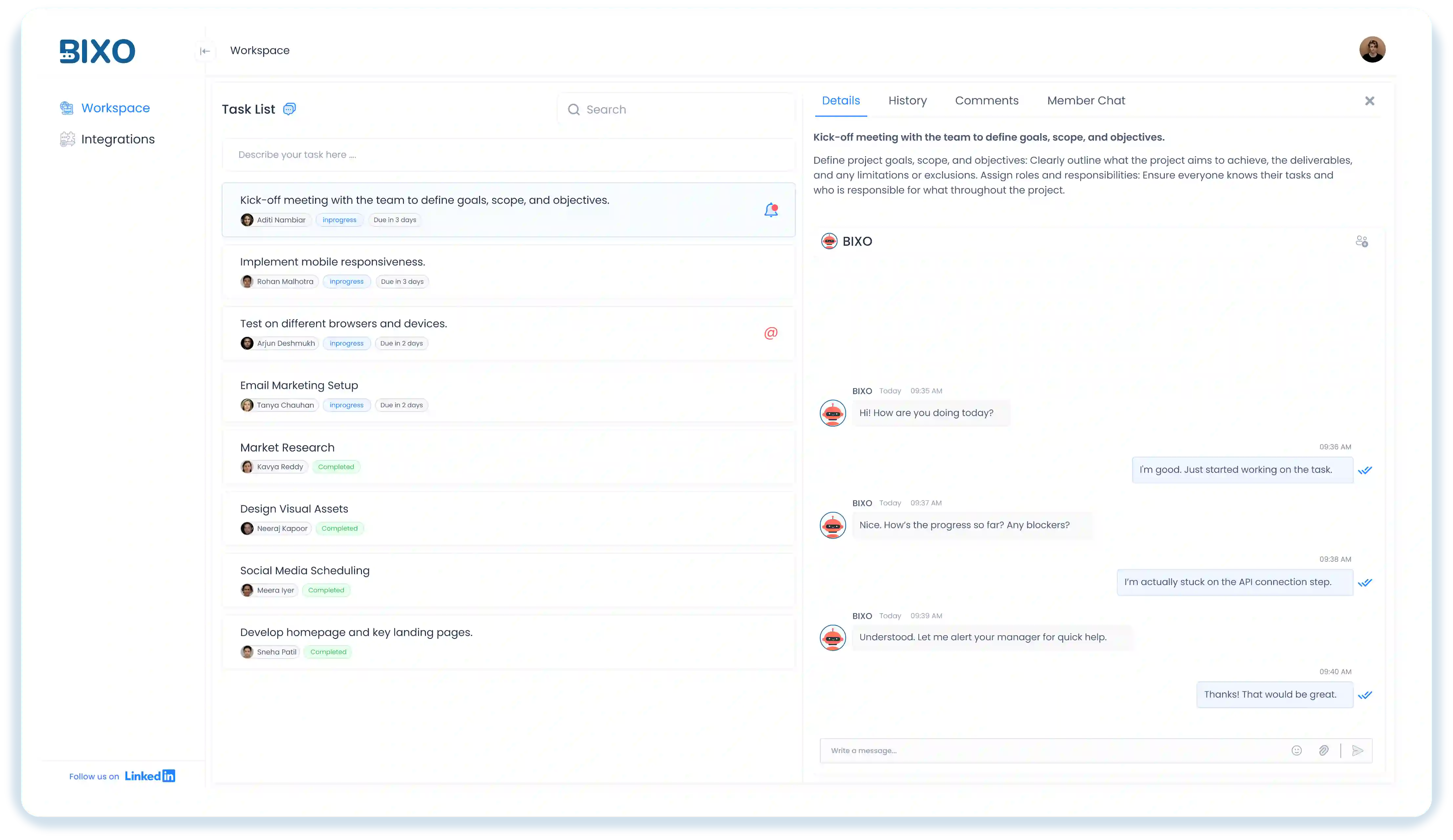
Managing multiple projects doesn’t have to mean constantly chasing updates, deadlines, and priorities. BIXO tracks tasks automatically, reports progress in real time, resolves blockers, and escalates issues only when necessary. You get instant summaries and insights, freeing you to focus on planning, strategy, and delivering results.
It also makes handling large teams effortless while keeping track of deadlines, dependencies, and team well-being. Seamless integrations, enterprise-grade security, and smart notifications automate routine check-ins and reporting. It saves time, boosts productivity, and ensures every project moves forward smoothly.
Conclusion
Project portfolio management provides you with a clear view of all your projects, allows you to know what really matters, spend resources wisely, and make decisions with confidence. Linking strategy, priorities, and execution, you can minimise risks, enhance efficiency, and make each project count towards meaningful results. With the right project management tools like BIXO, you gain complete control and the insights you require, keeping your portfolio aligned with your goals and driving better outcomes across your organisation.
FAQs
Project portfolio management focuses on choosing, prioritising, and overseeing all projects together. Project management focuses on executing individual projects. PPM helps you decide what to do first, what to pause, and how projects support business goals.
Use project portfolio management when you manage multiple projects that share the same resources. It works well when priorities compete, budgets feel tight, or decisions feel unclear, and you need better visibility, control, and strategic alignment.
Project portfolio management reduces wasted effort, unclear priorities, resource overload, and misaligned projects. It helps you see risks early, allocate resources wisely, and make confident decisions, so projects stay focused and deliver real business value.
You should review your project portfolio regularly, often every quarter or whenever priorities shift. These reviews help you adjust plans, stop low-impact projects, move resources where they matter most, and keep everything aligned with your current business goals.
Get a demo of BIXO

Recommended Blogs
How to Delegate Tasks Effectively: 7 Tips for Managers
Learn how to delegate tasks effectively, save time, and boost team productivity with step-by-step tips, real examples, and smart AI tools.
 Bhuvana Bitra |
 Oct 17, 2025
Project Objectives: A Simple Guide with Real Life Examples
Learn how to set clear project objectives that guide your team, track progress, and ensure success. Get practical tips and real-life examples to get started right.
Tarun Kumar Reddy Atmakuru |
Oct 17, 2025
25 Key Project Management Skills Every Manager Should Master
Learn 25 essential project management skills - soft, hard, and technical to manage teams, meet deadlines, and deliver successful projects.
Tarun Kumar Reddy Atmakuru |
Oct 17, 2025
×
Focus on what matters. BIXO handles the rest!