Table of Content
Focus on what matters. BIXO handles the rest!

Struggling to keep your projects on track and everyone aligned? Even minor projects can feel overwhelming with missed deadlines, unclear responsibilities and scattered goals. A project charter resolves this by providing a clear direction, defining roles, and laying a strong foundation from the very start.
In this blog, you’ll find out what a project charter is, why it’s important, the key components it should include, and some real-life examples. You’ll also learn the common mistakes to avoid and how to create a charter that keeps your projects on track from start to finish.
What Is a Project Charter?
A project charter is a formal document that starts a project and puts it on a clear path. It shows the purpose, scope, and goals of the project clearly from the very beginning. It officially authorises the project, lists the responsibilities, and acts as a guide to make decisions in the project lifecycle.
With a project management charter, you can be sure that everyone is working on the same track and knows where the project is headed. This eliminates confusion and keeps the team focused on delivering the intended results.
Why Is Project Charter Important?
A project charter is more than just a document. It sets the foundation for your project’s success. It gives clarity, alignment, and support from the very beginning. Here you can see the main reasons why it matters.
Gives Clear Direction from the Start
A project charter helps you understand the purpose, scope, and goals before any work begins. This early clarity keeps you focused and eliminates confusion later. You make decisions with confidence because you always understand what the project is trying to achieve and the direction it should follow.
Improves Alignment Across Everyone Involved
A project charter gives everyone a clear and shared understanding of the project vision and goals. When people are aligned, work moves in one direction rather than scattered efforts. This reduces misunderstandings, avoids delays, and creates a smoother process from the beginning to the end.
Sets Expectations Early and Clearly
A project management charter outlines what needs to be delivered, the priorities of the project and the expected timeline. When you can see expectations early on, you avoid guesswork and keep things moving in a steady manner. This clarity at an early stage prevents friction and makes the project organised.
Builds Support and Provides Formal Approval
A project charter provides your project with the official approval to start. You gain the authority to act, justify the work, and describe its value. With this support in place, you begin with confidence knowing that the project is acknowledged and backed.
Boosts Risk Awareness and Progress Tracking
A clear project charter assists you in identifying possible risks early, even before they affect the workflow. It is easier and more precise to track progress when you know the objectives and boundaries clearly. You are able to make time adjustments, prevent delays, and ensure the project continues to its desired end product.
What Are the Key Components of a Project Charter?
A project charter shows the blueprint for your project, defining its goals, boundaries, and responsibilities. It ensures everyone knows what’s expected and how to proceed. Here you can see the key components that make it effective.
Project Purpose and Objectives
The first thing required in a project charter is a clear statement of why the project exists and what it aims to achieve. This section explains the purpose of the project, the problems it will solve, and the objectives it will accomplish. By setting goals at the very beginning, everyone knows the desired outcomes, making it easier to organise tasks and track progress.
Project Scope
It is important to define the scope in your charter of the project. This section explains what the project will cover and what it will not include. It sets boundaries, avoids scope creep and ensures that all team members know the limits of their responsibilities. With a well-defined project scope, you can focus on the key tasks without being distracted by irrelevant work, keeping the project organised and on track from start to finish.
Deliverables and Milestones
List the deliverables you must produce and the milestones you need to reach clearly in your project charter. This gives you a roadmap to follow and will also assist in tracking progress. By breaking the project into smaller, measurable parts, you can spot delays early and adjust plans accordingly. A detailed project charter keeps everyone aware of the clear results expected in each phase.
Roles and Responsibilities
A project management charter must define who needs to do what. This section outlines the roles, responsibilities and accountabilities of the team members, stakeholders and project sponsors. Having clarity on responsibilities reduces confusion, prevents overlap, and ensures every task has an owner. Precisely knowing who is responsible for each specific aspect of the project helps in ensuring that the work runs smoothly and avoids unnecessary delays.
Timeline and Schedule
Including a timeline in your project charter assists you in planning when tasks should start and finish. You can track the progress and manage the workloads when needed. This section gives you a schedule of activities, deadlines and milestones. A clear timeline allows you to take control over how fast the project moves and prevent unnecessary bottlenecks, keeping your project aligned with its intended delivery dates.
Budget and Resources
The charter of your project should also include the resources and budget required to complete it. This involves money, equipment, and people. Being aware of what is available and what is needed helps you plan properly and ensure that there are no resource shortages that could slow down the process. A clear project budget in your charter assists you in managing costs effectively and ensures the quality of the project is not compromised.
Risks and Assumptions
Each project has uncertainties, and your project charter must address them. In this section, you list the possible risks, challenges, and assumptions that you are making about the project. By identifying risks early, you can plan mitigation strategies and reduce the likelihood of setbacks. Including this in your project management charter prepares you to handle challenges and make informed decisions throughout the project lifecycle.
Approval and Sign-Off
Lastly, add a formal approval section to your project charter. This is where important stakeholders or sponsors approve the project and give permission to start. With this approval in hand, you can proceed to implement the plan, have access to resources, and work with confidence. A signed project document also provides an official record that aligns everyone with the project goals and expectations.
How to Create a Project Charter?
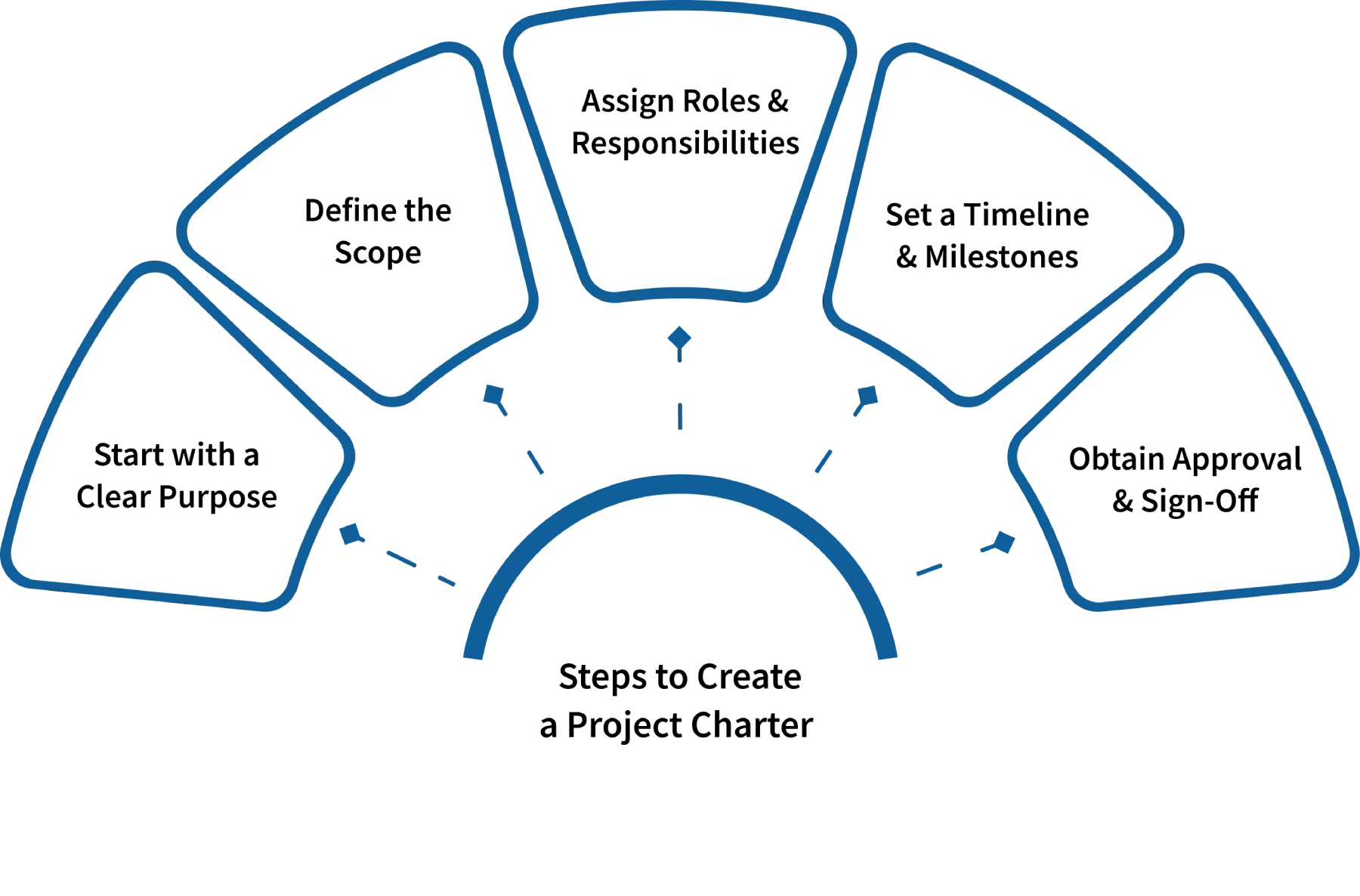
Creating a project charter might sound simple, but it’s what keeps your project on track. It gives clear direction, shows who is responsible for what, and lays out how the work will get done. Here you can see the essential steps to build one effectively.
Start with a Clear Purpose
Start by defining the purpose of the project and its goal. The charter of your project must be clear about what you will achieve, what problems it addresses and what the expected outcomes are. It serves as a guide for every decision you make and ensures the project stays on track. When everyone understands the purpose, you can concentrate on what really matters.
Define the Scope
The next step is to outline what will and will not be in your project. To prevent scope creep, the charter of the project should set clear boundaries and keep the team focused. Defining the scope helps you plan resources, assign tasks, and manage time effectively. You can also organise your projects well and ensure everyone knows what they're responsible for.
Assign Roles and Responsibilities
Identify who is responsible for each task or deliverable. List roles, responsibilities, and accountability clearly in your project charter. When everyone understands their role, you can reduce confusion, avoid duplication, and each part of the project will have someone in charge. This clear assignment of roles helps the team work smoothly and complete tasks on time.
Set a Timeline and Milestones
Include a schedule of activities, deadlines, and key milestones. Your project management charter provides a roadmap to track progress and measure performance. Milestones divide the project into manageable parts, making it easier to find the delays at an early stage and adjust the plans if needed.
Obtain Approval and Sign-Off
Finally, get official approval from the stakeholders or sponsors. Include a sign-off section in your project charter to confirm that the project is officially authorised. Such approval gives you the authority, access to resources, and alignment required to proceed with the implementation of the plan with confidence. A signed document keeps all stakeholders aligned and officially approves the start of the project.
What Are the Examples of a Project Charter?
Starting a project without a clear plan can get messy. A project charter brings everything together, including goals, scope, roles, timeline, and budget, so everyone knows what to do and stays coordinated. Here you can see some real examples of project charters in action.
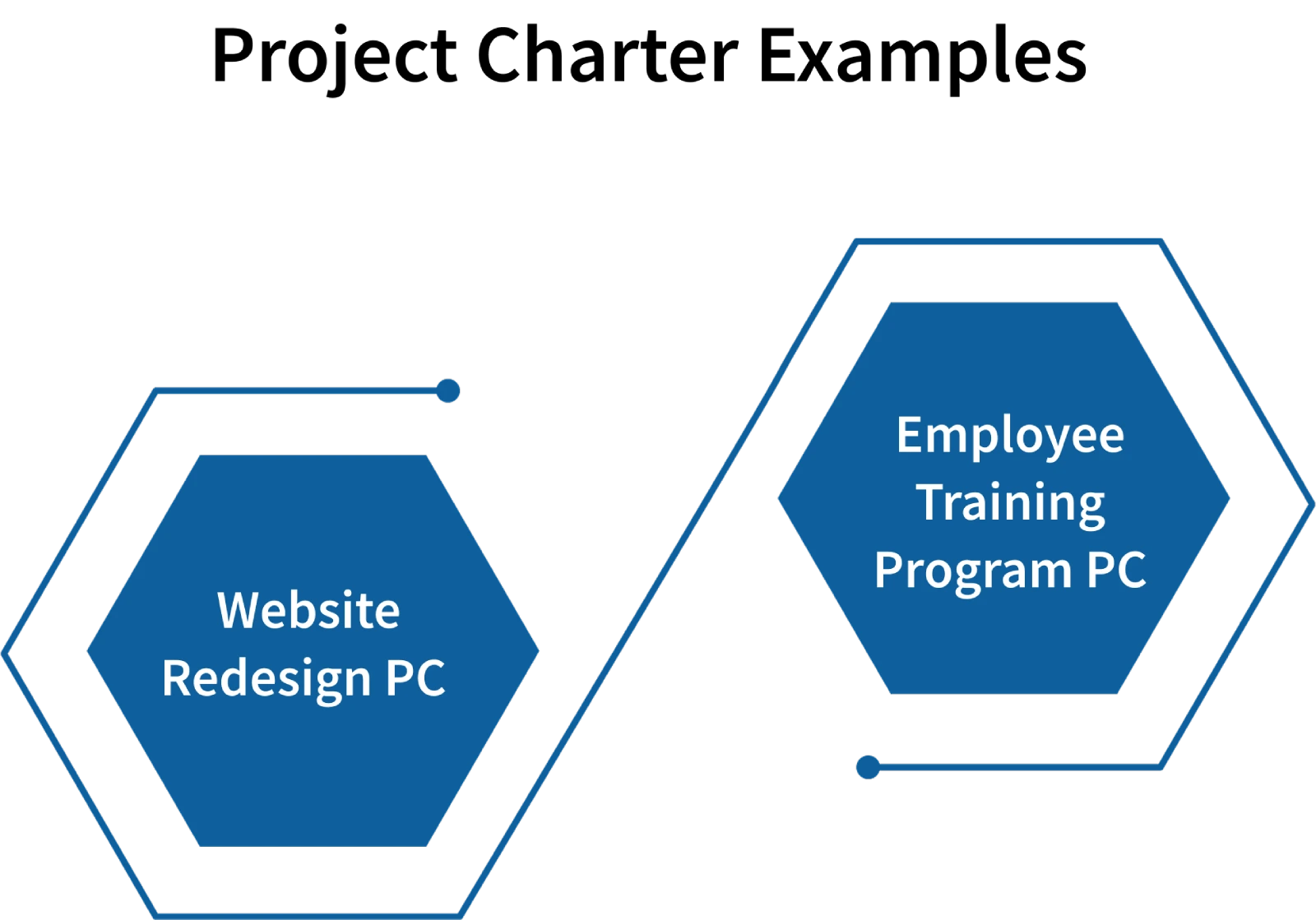
Example1: Website Redesign Project Charter
Project Title: Company Website Redesign
Project Manager: Jack Ryan
Project Purpose: Redesign the company website to create a cleaner look, improve how visitors move through the site and increase conversions. The purpose is to make the site easier to use and more aligned with the brand.
Project Objectives:
- Improve navigation so visitors can find key information faster.
- Update all layouts and visuals.
- Create a fully mobile-friendly version.
- Increase form submissions and signups by improving page flow.
Project Scope:
Includes:
- Homepage
- About
- Services
- Blog
- Contact pages
- Basic SEO setup
Excludes:
- Backend changes
- Platform migration
Key Deliverables:
- New design mockups
- Updated website content
- Full mobile responsive version
- Improved menu and page structure
- Testing and quality checks
- Final live website
Roles and Responsibilities:
- Design lead: Creates layouts and style.
- Content writer: Updates text for all pages.
- Developer: Builds and tests the site.
- Project overseer: Reviews progress and approves each stage.
- Final live website
Timeline:
Total duration: 8 weeks
- Week 1 to 2: Design
- Week 3 to 4: Content
- Week 5 to 6: Development
- Week 7: Testing
- Week 8: Launch
Budget and Resources:
- Design work: $500
- Stock images: $90
- Development tools and plugins: $200
- Content support: $130
Total Estimated Budget: $920
Risks and Assumptions:
- Risks: Slow feedback, delays in content approval, and technical issues during testing.
- Assumptions: Team availability, access to required tools, and timely input from stakeholders.
Approval:
Approved by: Arun Mehta, Project Sponsor
Date: 12 March 2025
Example 2: Employee Training Program Project Charter
Project Title: Employee Training Program
Project Manager: Emily Hayes
Project Purpose: Create a structured training program that helps the team improve skills, learn new tools and work more effectively. The purpose is to build a simple learning path that supports better productivity across the organisation.
Project Objectives:
- Strengthen communication skills.
- Improve knowledge of workplace tools.
- Standardise important processes.
- Build a training system that is easy for new and current team members to follow.
Project Scope:
Includes:
- Communication modules
- Software tool training
- Workplace process training
- Assessments and feedback forms
Excludes:
- External certification programs
- Travel-based workshops
Key Deliverables:
- Training materials
- Video lessons
- Session schedule
- Attendance tracking
- Assessments and feedback system
- Final training report
Roles and Responsibilities:
- Trainer: Creates and delivers training content.
- Coordinator: Manages schedules and communication.
- Team members: Attend and complete sessions.
- Project manager: Track participation and review results.
Timeline:
Total duration: 4 weeks
- Week 1: Create training content
- Week 2 to 3: Conduct training sessions
- Week 4: Assessments and feedback evaluation
Budget and Resources:
- Training materials: $222
- Video recording and editing tools: $167
- Trainer fees: $500
- Software licences: $167
Total Estimated Budget: $1,056
Risks and Assumptions:
- Risks: Low attendance, schedule conflicts, reduced participation.
- Assumptions: Team availability, access to all tools, and management support.
Approval:
Approved by: Kavya Deshpande, Training Coordinator
Date: 12 September 2025
What Are the Common Mistakes You Need to Avoid in a Project Charter?
Even a well-planned project can run into problems if you don’t create the charter properly. Many mistakes cause confusion, delays, and misaligned work, and here you can see the most common ones.
Vague or Unclear Project Purpose
A common mistake in a project charter is when the team does not clearly define why the project exists and what it should accomplish. If the project charter doesn’t clearly state the goals and expected outcomes, the team can get confused or start working in different directions. A well-constructed project management charter clearly states the purpose and goals, and thus all decisions, tasks, and milestones are in line with the overall vision of the project.
Undefined Roles and Responsibilities
The other common mistake is the failure to define roles and responsibilities clearly. Your project charter must specify who is accountable for every task and deliverable. Without it, team members may miss & overlap some tasks or be unsure who they should report to. Clearly listing responsibilities in the charter ensures every task has a responsible person and keeps the project on track.
Incomplete Scope Definition
Most project charters fail because of not define the scope clearly. The charter scope clearly outlines what the project includes, what it excludes, and the limits of responsibility. Without this clarity, you may face unexpected changes, extra work, or missed priorities. A complete project management charter helps you stay focused on what truly matters.
Ignoring Timeline, Milestones, and Risks
Some project charters lack schedules, milestones, and potential risks, and it is difficult to monitor progress or plan ahead. By including timelines, key milestones, and identified risks in your project charter, you can track progress, spot delays at the earliest stages, and prepare for challenges.
Lack of Formal Approval
Lastly, failure to obtain official approval is a serious mistake. If stakeholders or sponsors do not sign the project charter, you may have difficulty accessing resources or getting support when needed. Adding an approval section in the project management charter confirms authorisation and gives you the confidence to proceed, ensuring everyone understands things from the start.
How BIXO Simplifies Project Charter Creation and Management
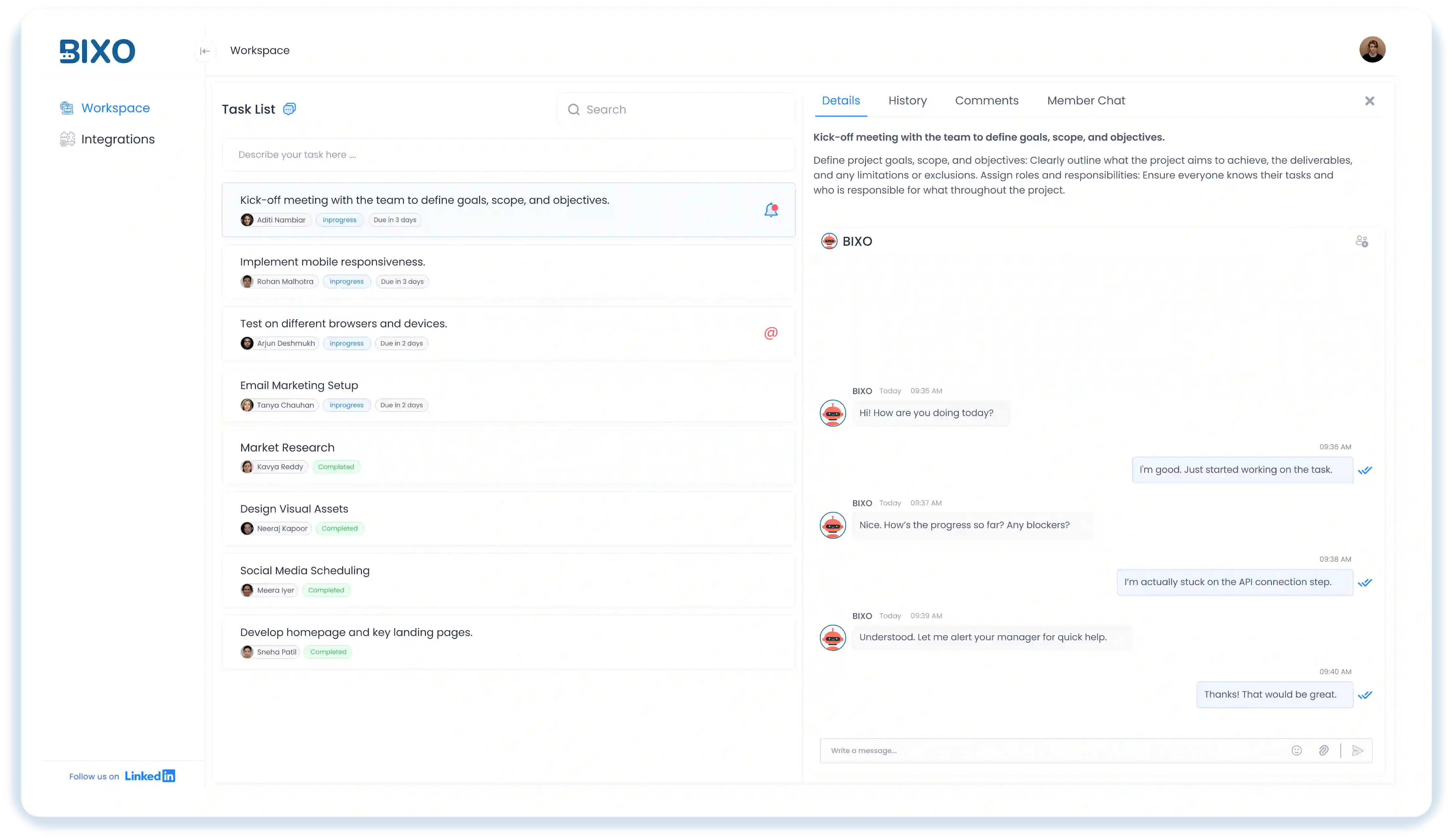
Creating a project charter shouldn't drain your time or focus. BIXO takes over most of the hard work by keeping track of tasks, updates and progress across your entire team. Instead of checking in with people one by one, BIXO gathers the information for you, tracks deadlines, follows up when work is slipping and sends you a clear summary. You stay informed without chasing anyone, and you get a better view of risks, bottlenecks and priorities while the project is moving forward.
You just define the work, and BIXO keeps everything moving in the right direction by monitoring progress, spotting delays, bringing issues to your attention and coordinating work across people. It keeps large teams aligned and supports smoother planning while freeing you from repetitive check-ins and unnecessary standups. You save time, improve focus and maintain steady progress with an AI assistant working for you around the clock at no extra cost.
Conclusion
A project charter provides you with a clear starting point, sets expectations and helps to keep your work moving in the right direction. By knowing what a project charter is and how it supports planning, communication, and decision making, you avoid confusion and stay focused on the real priorities.
The project charter examples in this blog show that a well-structured charter helps you track progress and prepare for challenges. By building your charter carefully and keeping it updated, you ensure smoother execution, a more productive team, and better results from start to finish.
FAQs
A project charter shows the purpose, goals, and scope of your project right from the beginning. It makes everyone’s roles clear, officially starts the project, and guides decisions, helping the team stay aligned and focused on the desired results.
Include key stakeholders, project sponsors, and team members in creating the charter. Their input helps make sure the goals, responsibilities, timeline, and resources are practical. And formal approval ensures everyone understands and agrees before the project starts.
The scope should clearly show what’s part of the project and what’s not. Clear boundaries reduce confusion, prevent extra work, and help the team concentrate on tasks that truly move the project toward its goals.
Formal approval confirms that stakeholders agree with the project’s objectives, resources, and plan. It provides authority to start the work, ensures alignment, and prevents delays caused by lack of support or unclear responsibilities.
Get a demo of BIXO

Recommended Blogs
How to Delegate Tasks Effectively: 7 Tips for Managers
Learn how to delegate tasks effectively, save time, and boost team productivity with step-by-step tips, real examples, and smart AI tools.
 Bhuvana Bitra |
 Oct 17, 2025

Project Objectives: A Simple Guide with Real Life Examples
Learn how to set clear project objectives that guide your team, track progress, and ensure success. Get practical tips and real-life examples to get started right.
Tarun Kumar Reddy Atmakuru |
Oct 17, 2025
25 Key Project Management Skills Every Manager Should Master
Learn 25 essential project management skills - soft, hard, and technical to manage teams, meet deadlines, and deliver successful projects.
Tarun Kumar Reddy Atmakuru |
Oct 17, 2025
×
Focus on what matters. BIXO handles the rest!