Table of Content
Focus on what matters. BIXO handles the rest!

Change is something every project faces no matter how detailed the plan is, there’s always a chance that something will change suddenly. A client might ask for something new, deadlines can change, or unexpected problems can come up. Without a clear approach, these changes can create confusion and slow things down. Change control helps you handle these changes smoothly, keeping your project on track and your team on the same page.
In this blog, you’ll learn what change control means, why it matters, how it works and how to use it to keep your projects running smoothly while avoiding delays and confusion.
What Is the Change Control in Project Management?
Change control in project management is a structured process used to identify, evaluate, and approve changes to a project’s scope, schedule, or budget while maintaining control and minimising interruptions.
The main purpose of change control management in project management is to prevent confusion, unexpected work or extra tasks, and keep everyone aligned on what’s being changed and why.
Why Change Control in Project Management is Important?
Before we look at the reasons, it’s helpful to know that without a proper change control system, even small changes can cause confusion. Here’s why it matters for every project.
- Prevents Confusion and Miscommunication
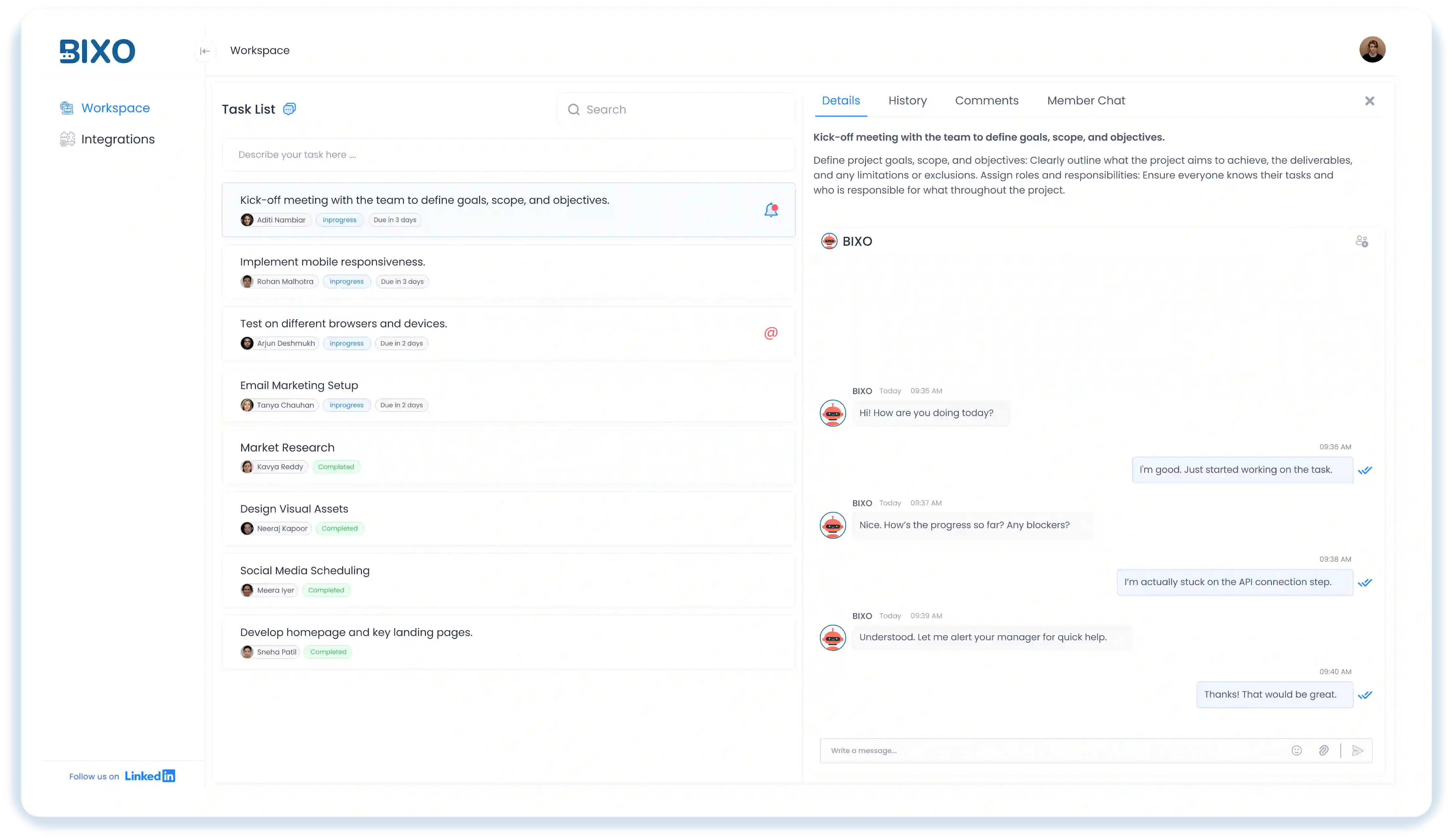
A clear change control process helps everyone on the team understand what’s changing, why it’s changing, and when it will happen, so nothing gets missed or misunderstood. Stay aligned and simplify project coordination with AI assistants like BIXO that automatically send timely updates and reminders to your team. - Keeps Projects Aligned with Goals
Change control ensures that every adjustment supports your project’s main objectives , keeping the work focused and on track. - Prevents Task Overload
By handling changes carefully, your project stays on track without adding too much work or stress to the team. BIXO helps by automatically tracking updates and organising tasks efficiently. - Improves Accountability
With a change control board in project management, decisions are reviewed and approved by the right people, ensuring accountability. - Maintains Quality and Timelines
A clear change control plan helps your team finish work on time, stick to the budget, and deliver consistent results.
How Does Change Control Work in Project Management?
Change control in project management follows a clear process to make sure every change is handled properly and nothing gets missed. Here’s how the whole process usually works step by step.
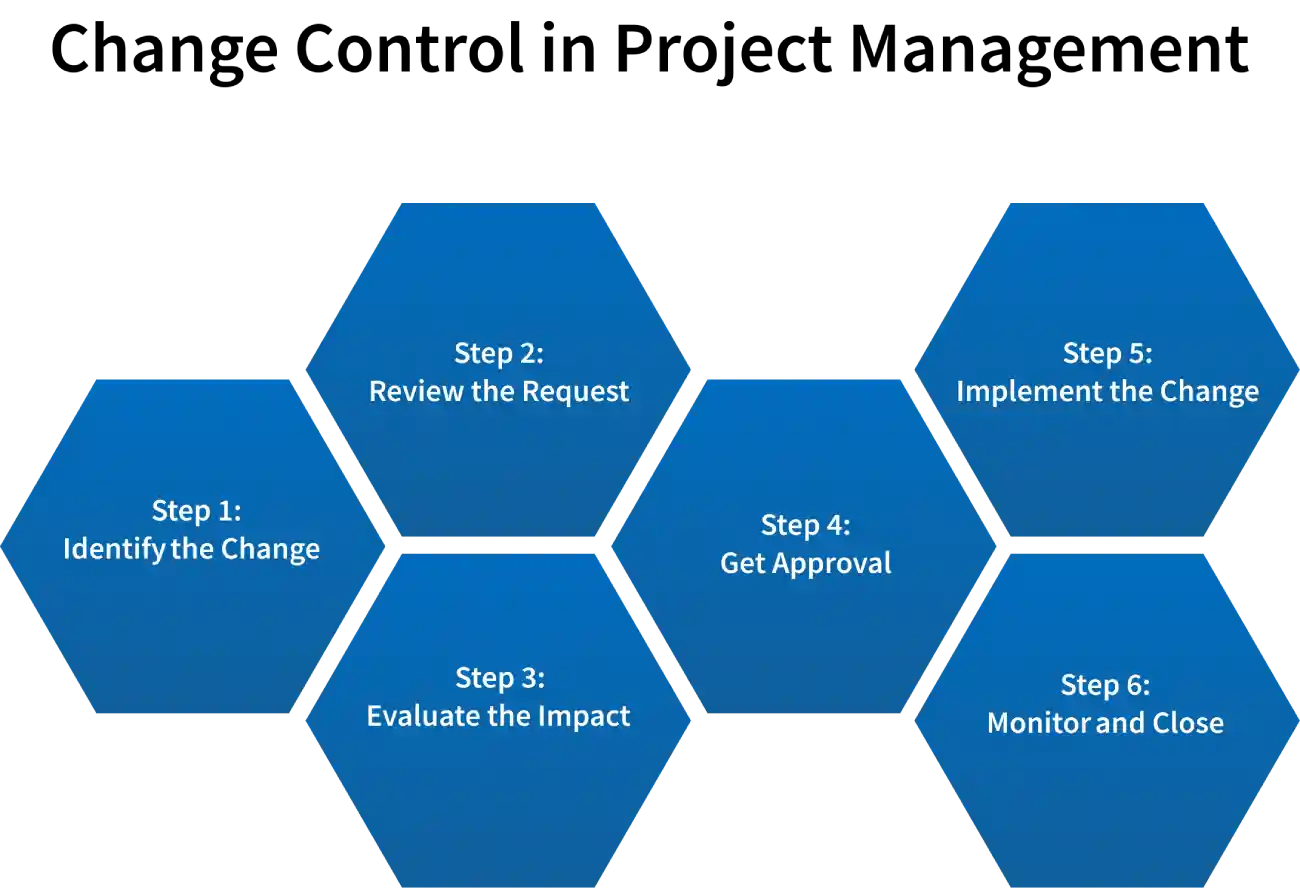
Step 1: Identify the Change
The process starts when someone notices that a change is needed, like a new task, a delay, or a missing resource. Once they spot it, they write it down and share it with the team.
Step 2: Review the Request
The project manager or review team checks the request to understand how it might affect the project’s work, schedule, or budget.
Step 3: Evaluate the Impact
The team takes a closer look at what the change means and how it might affect deadlines, costs, and overall progress. This helps them decide if it’s a good idea to move forward.
Step 4: Get Approval
After reviewing, the request is sent for approval. Only approved changes become part of the project plan.
Step 5: Implement the Change
Once approved, the team applies the change. They update plans, schedules, and make sure everyone knows about the new updates.
Step 6: Monitor and Close
Finally, the team keeps an eye on how the change is working. When it’s done successfully, they mark the request as complete and close it.
What Are the Benefits of a Change Control in Projects?
Implementing change control in projects helps you manage updates smoothly and keeps the team on the same page. The following benefits show how it makes work easier and projects more successful:

- Better Team Organisation
When you have a good change control process, everyone knows what’s changing and why. This keeps the team on the same page and avoids confusion or surprises. - Smarter Decisions By reviewing changes carefully, you can make better choices that actually help your project instead of creating unnecessary problems.
- Fewer Risks and Mistakes Even small changes can cause trouble if not handled properly. A solid process helps you spot potential issues before they affect your project.
- Better Accountability and Communication With a change control board in place, every change is reviewed, and your team stays informed and responsible.
- Saves Time and Effort A clear plan helps you focus on what truly matters, instead of wasting time on last-minute conditions or unclear requests.
What Should be Included in the Change Control Template?
A good change control template keeps project updates clear and organised. It records, reviews, and manages changes smoothly. Here’s what to include in a change control plan in project management:
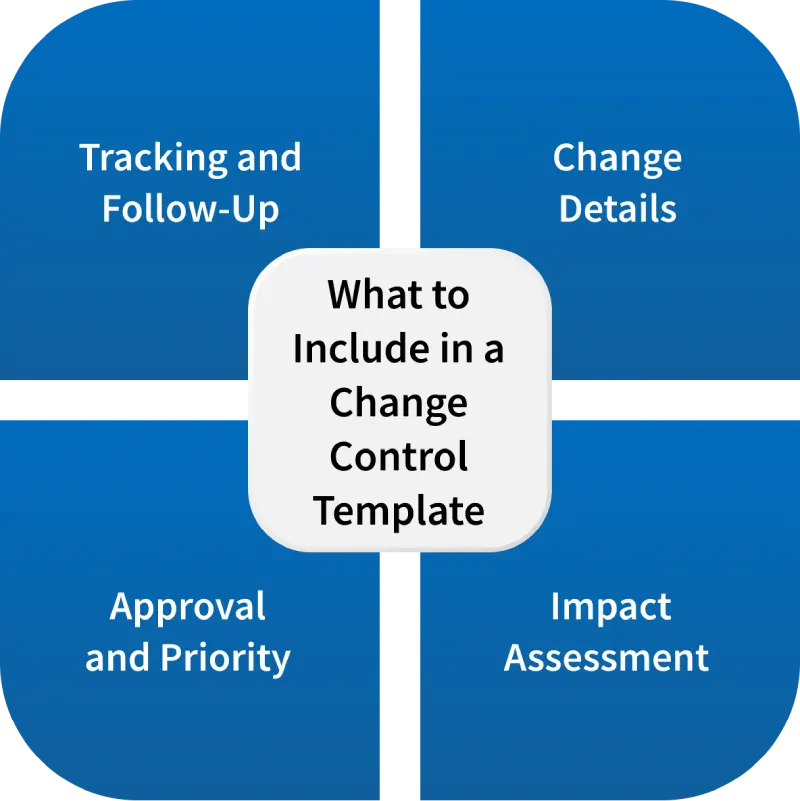
Change Details and Reason
Write down what the change is, why it’s needed, and who requested it. Include the project name and a brief identifier for the change.
Impact and Assessment
Explain how this change might affect the project’s schedule, budget, resources, or quality. Note any risks, extra resources needed, or alternative options considered.
Approval and Priority
Add a section where the change control board or managers can review the request and decide if it should go ahead. Include the urgency of the change and make a note of who approved it.
Tracking and Follow-Up
Keep track of the change status, target implementation date, steps taken, who’s responsible, and any notes or comments.

How BIXO Supports Every Part of Project Management
BIXO helps you manage key parts of your project in one place. It keeps your scope clear with well-defined tasks and timelines, tracks progress automatically, and helps you plan your time better. You can assign work to the right people, balance workloads, and avoid delays.
With smart reminders, progress reports, and team updates, BIXO improves communication, reduces risks caused by missed deadlines, and helps maintain overall project quality. It brings everything together so your team can stay focused and work smoothly from start to finish.
Conclusion
Implementing change control in your projects keeps your team organised, tasks manageable, and projects on track. When you have a clear process and the right change control tools, it’s easier to avoid confusion, stay on track with goals, and make sure every change actually helps. Tools like BIXO make this even simpler by automatically tracking updates, managing tasks, and keeping everyone on the same page.
FAQs
Yes, it keeps everyone informed about updates and next steps. Clear communication reduces confusion and keeps the team aligned.
Changes should be checked regularly throughout the project. Frequent reviews help spot issues early and keep the plan on track.
It helps avoid mistakes, delays, and misunderstandings in your project. This keeps the team focused and work flowing smoothly.
Note what the change is, why it’s needed, who requested it, and any impact it may have. This keeps a clear record for the team.
Get a demo of BIXO

Recommended Blogs
How to Delegate Tasks Effectively: 7 Tips for Managers
Learn how to delegate tasks effectively, save time, and boost team productivity with step-by-step tips, real examples, and smart AI tools.
 Bhuvana Bitra |
 Oct 17, 2025

Project Initiation: Key Steps, Best Practices, & Mistakes to Avoid
Learn what project initiation is, why it matters, key steps to follow, best practices to apply, and mistakes to avoid for a strong and successful project start.

Project Management Triangle: Managing the Triple Constraints
Master the project management triangle by balancing scope, cost, and time with simple strategies that drive successful outcomes every time.
Jahnavi Chintakrindhi |
Oct 13, 2025
×
Focus on what matters. BIXO handles the rest!